Consultation

Appointment

Directions

Before & After


Teeth usually look longer because the gum line has moved down (gum recession),
exposing more of the tooth that was previously covered.
Many people assume this is just aging, but several factors can contribute:
So if you notice receding gums, it helps to look beyond the visible change and ask why it happened.
| What to notice | What it may look like |
|---|---|
| Tooth length | Teeth seem longer than they used to |
| Sensitivity | Cold food or drinks cause discomfort |
| Bleeding | Gums often bleed when you brush |
| Mobility | Teeth feel unstable when chewing |
| Gum color | Red or swollen areas |
If any of these sound familiar, a dental exam is a good next step.
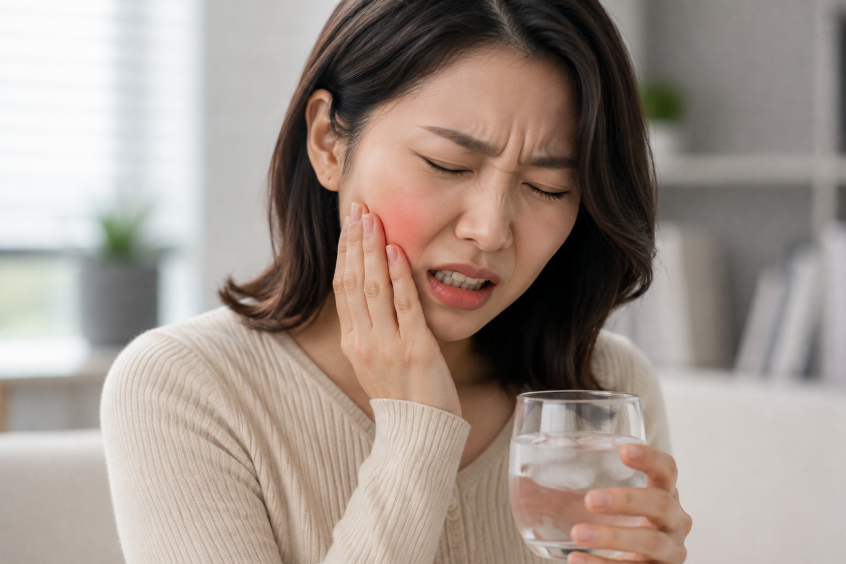
Treating sensitivity alone may not be enough,
because sensitivity is a symptom and the cause differs from person to person.
When gums recede, the tooth root surface can become exposed and react to cold.
If the cause is gum disease, inflammation control may be needed. If it is a bite problem,
a bite evaluation may also be part of the plan.
In other words, receding gums are not handled the same way for everyone
the approach should match your current oral condition.
Gums that have receded are generally not expected to return to their original position on their own
and outcomes vary from person to person depending on the cause and the condition of the tissue.

In early stages, care focuses on slowing progression:
Learning a gentler, correct brushing technique
Managing plaque and tartar
Addressing habits such as grinding or clenching
Checking how your teeth come together
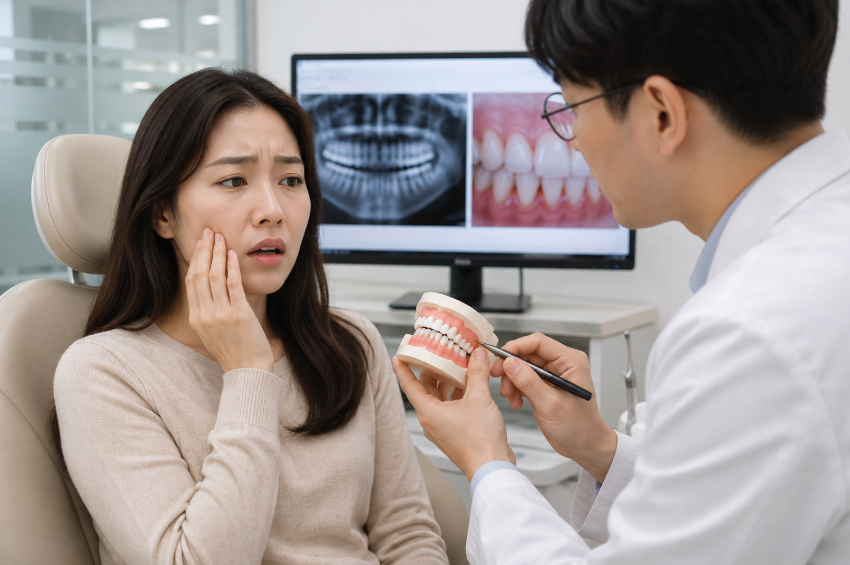
If tissue loss has already progressed, a dentist evaluates the gum height, supporting bone,
and attachment tissue before recommending treatment.
Depending on the case, procedures such as gum grafting may be considered,
but whether they are suitable, and how they turn out, differs for each patient and is discussed after an exam.
A good starting point is whether the clinic explains the cause of your problem
and your next steps based on exam findings.

Receding gums are rarely only a gum issue; gum tissue, bite, and daily habits can all play a role.
When comparing clinics, you may want to look at whether they:
Review your whole mouth, not just one symptom
Explain why the change happened, with your exam results
Outline what care you will need going forward
Involve more than one specialty when needed
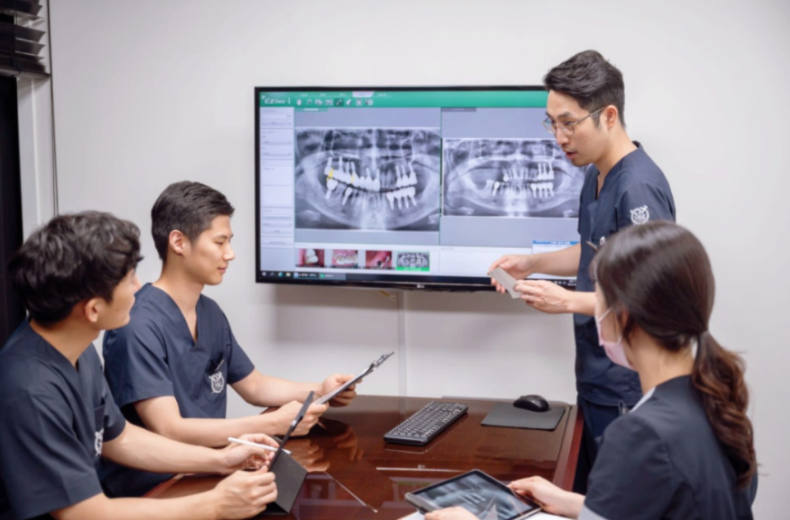
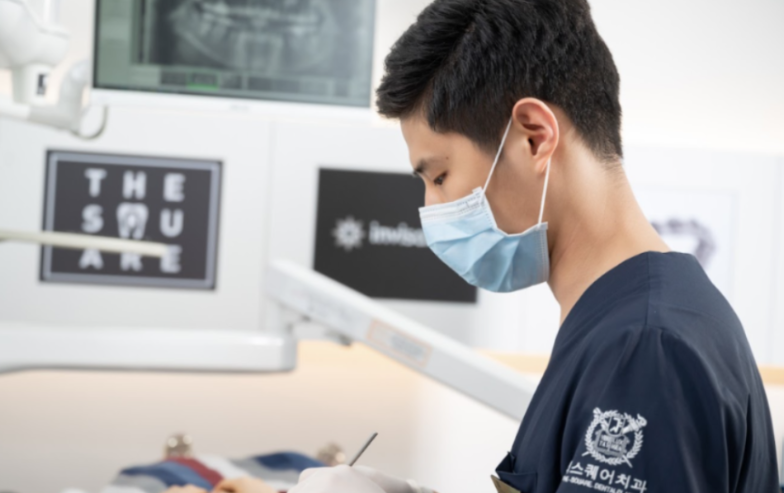
The Square Dental Clinic uses a collaborative approach in which specialists review your condition together,
then explains the findings and a care direction.
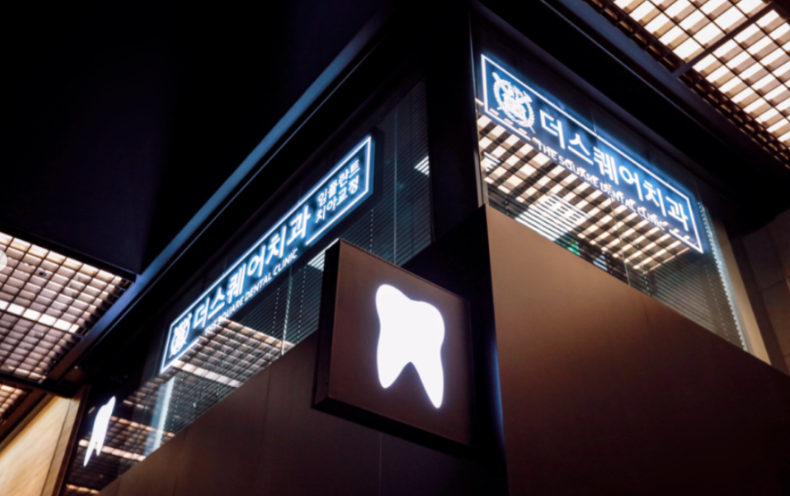
The Square Dental Clinic is in the D-Tower in Gwanghwamun, in central Seoul, about one hour from the airport, which makes it practical for visitors and expatriates alike.
Here is what overseas patients most often want to know:
Language: English consultation is available.
Safety: An initial exam and, where needed, X-rays help determine the cause before any treatment is suggested. Treatment is planned only after you understand and agree to it.
Time: The length of care depends on your condition. Early-stage management may be simple, while more involved treatment takes longer. We will explain the expected schedule after the exam, so you can plan around your trip.
After you return home: We can explain what to watch for and how to keep up your home care, and share your records so your home dentist can follow up.
Cost: Non-covered treatment fees vary with your condition and are explained during consultation.
Results and recovery vary between individuals.
Receding gums can have several overlapping causes.
If your teeth look longer or feel sensitive, find out your current condition first.
Look for the cause, not only relief from symptoms.
When choosing a clinic, consider how it diagnoses, explains, and coordinates care.
Gum changes build up slowly. Rather than waiting, getting the cause checked early is the practical step.

Q. Are receding gums just a sign of aging?
A. Not only. Aging makes them more common, but gum disease, hard brushing,
grinding, thin gums, and bite issues can all contribute, so the cause needs to be checked.
Q. Does tooth sensitivity always mean gum recession?
A. No. Sensitivity can come from cavities, worn enamel, gum recession,
or bite problems, so an exam is needed to tell them apart.
Q. Can receding gums grow back by themselves?
A. They generally do not return to their original position on their own.
Early care aims to slow progression, and any further options are decided individually after an exam.
Q. When should I see a dentist soon?
A. If your gums bleed repeatedly, look red or swollen, a tooth feels loose,
or the change appears quickly, get checked sooner rather than later.
Q. Can I get an exam during a short stay in Korea?
A. Often an initial exam can be arranged with a short visit, but the plan depends on your condition
Please contact us in advance to discuss your schedule.