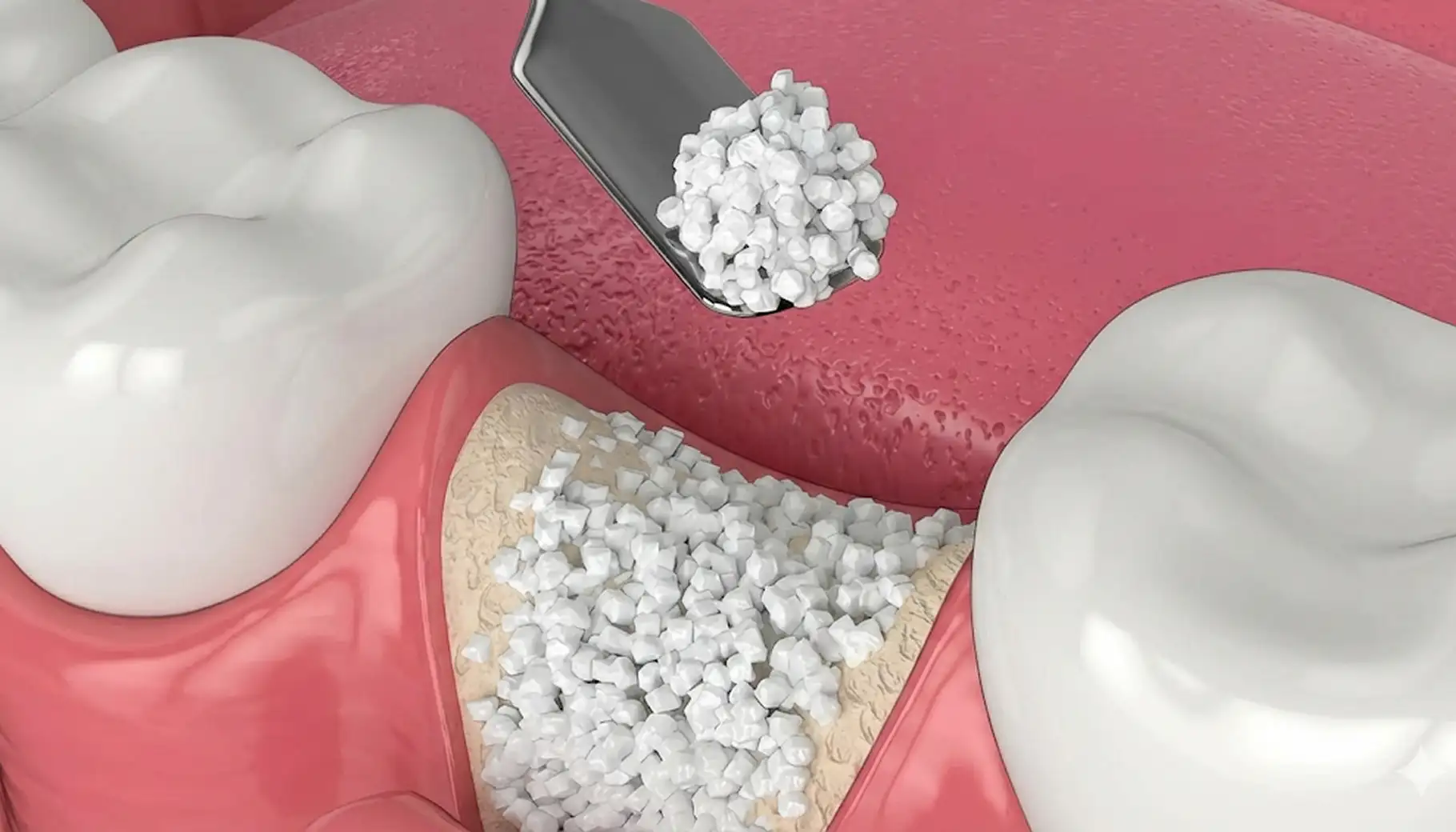
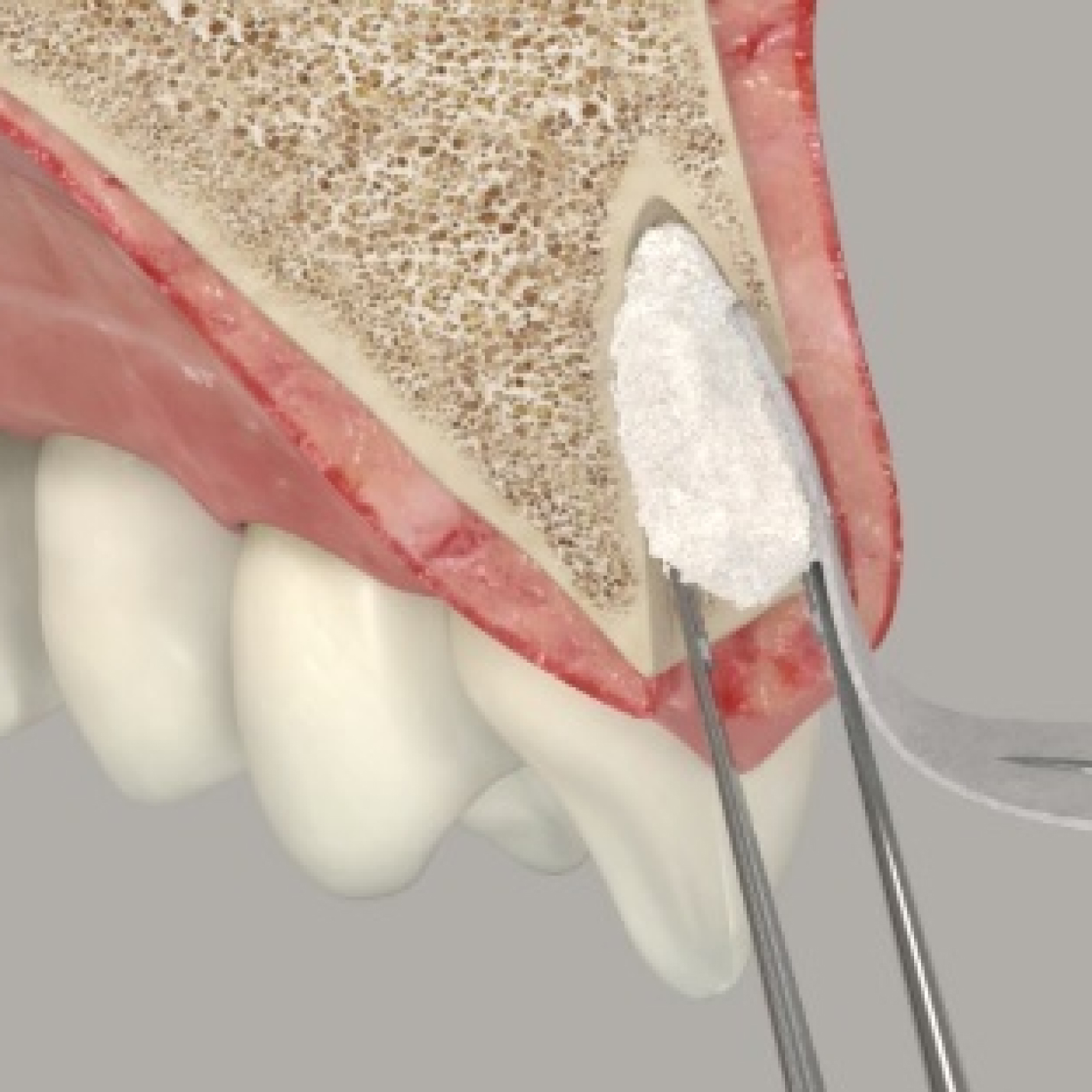
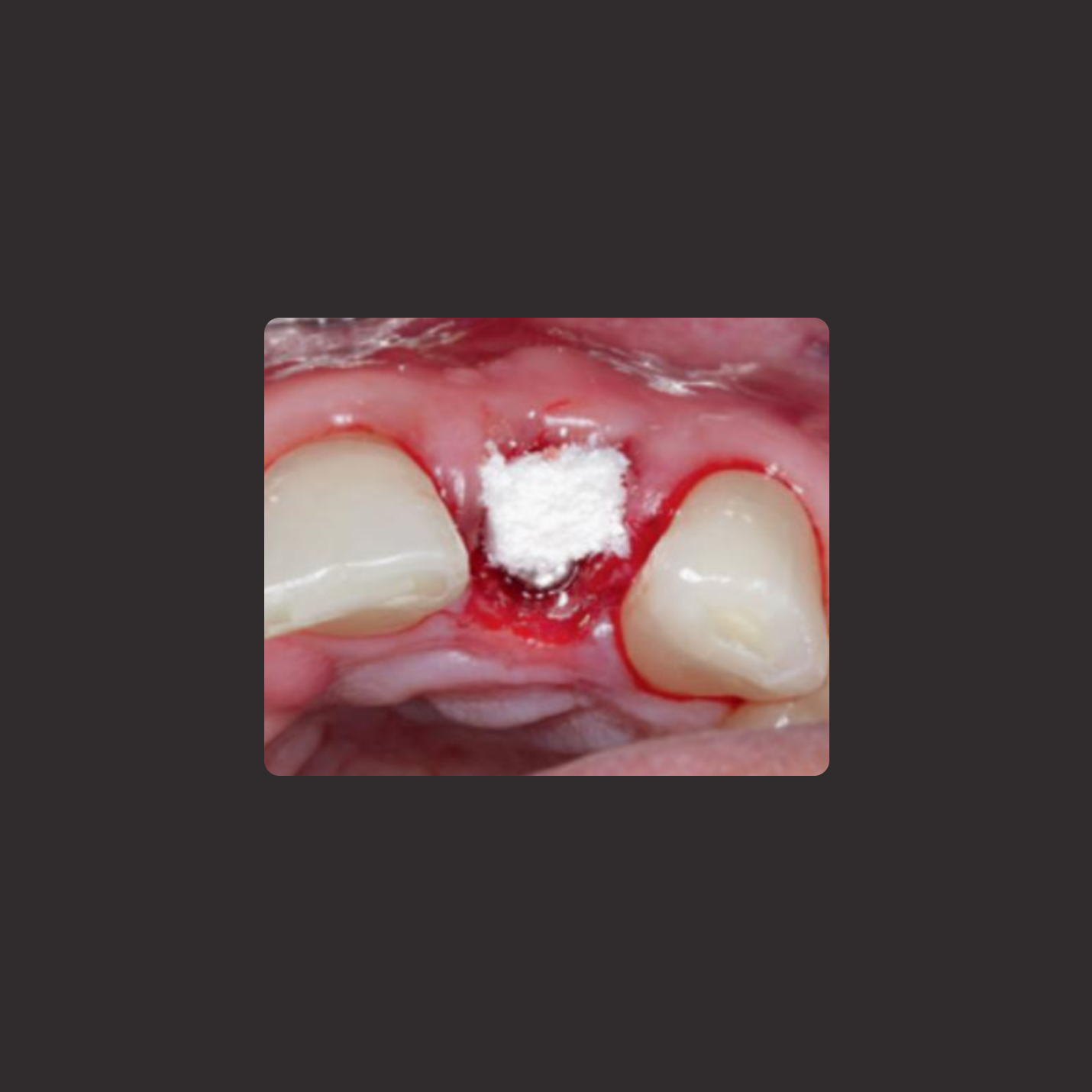
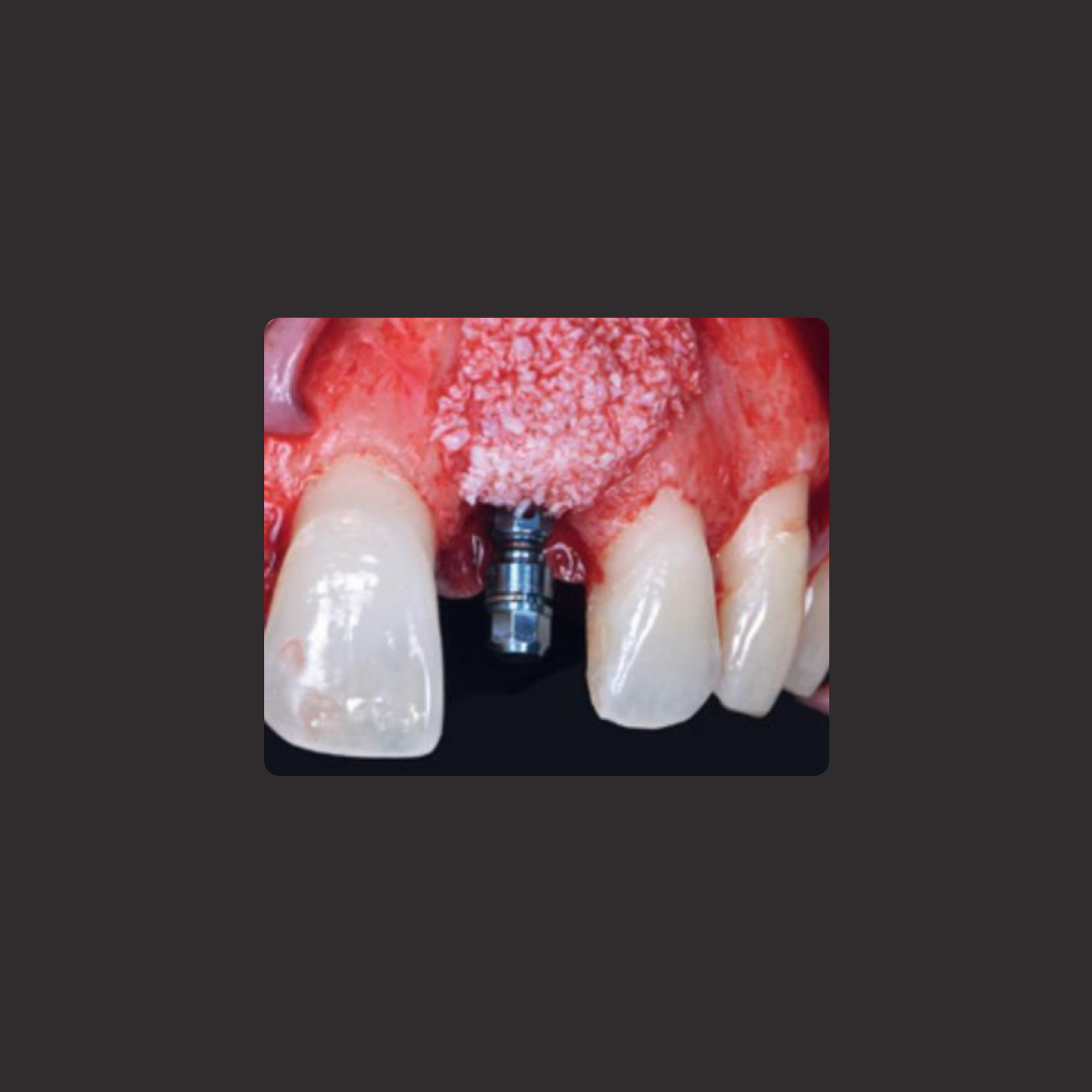
Dental implant bone grafting is a procedure used when there is insufficient bone width or height to support an implant. Bone graft material is placed around the deficient area and covered with the gum tissue to help create or preserve the bone volume needed for implant placement.
How Much Does Implant Bone Grafting Cost?
Bone grafting fees vary depending on the clinic, surgical technique, amount of graft material required, and complexity of the procedure. In Korea, a simple bone graft may typically cost around KRW 200,000–400,000, while more complex procedures such as Guided Bone Regeneration (GBR) may range from approximately KRW 400,000–800,000.
What Affects the Cost of Implant Treatment?
01
Cost per Implant
02
Number of Implants Required
03
Additional Procedures (Bone grafting, sinus augmentation, and other additional procedures may affect the total treatment cost.)
How Does Bone Grafting Differ by Treatment Area?
01
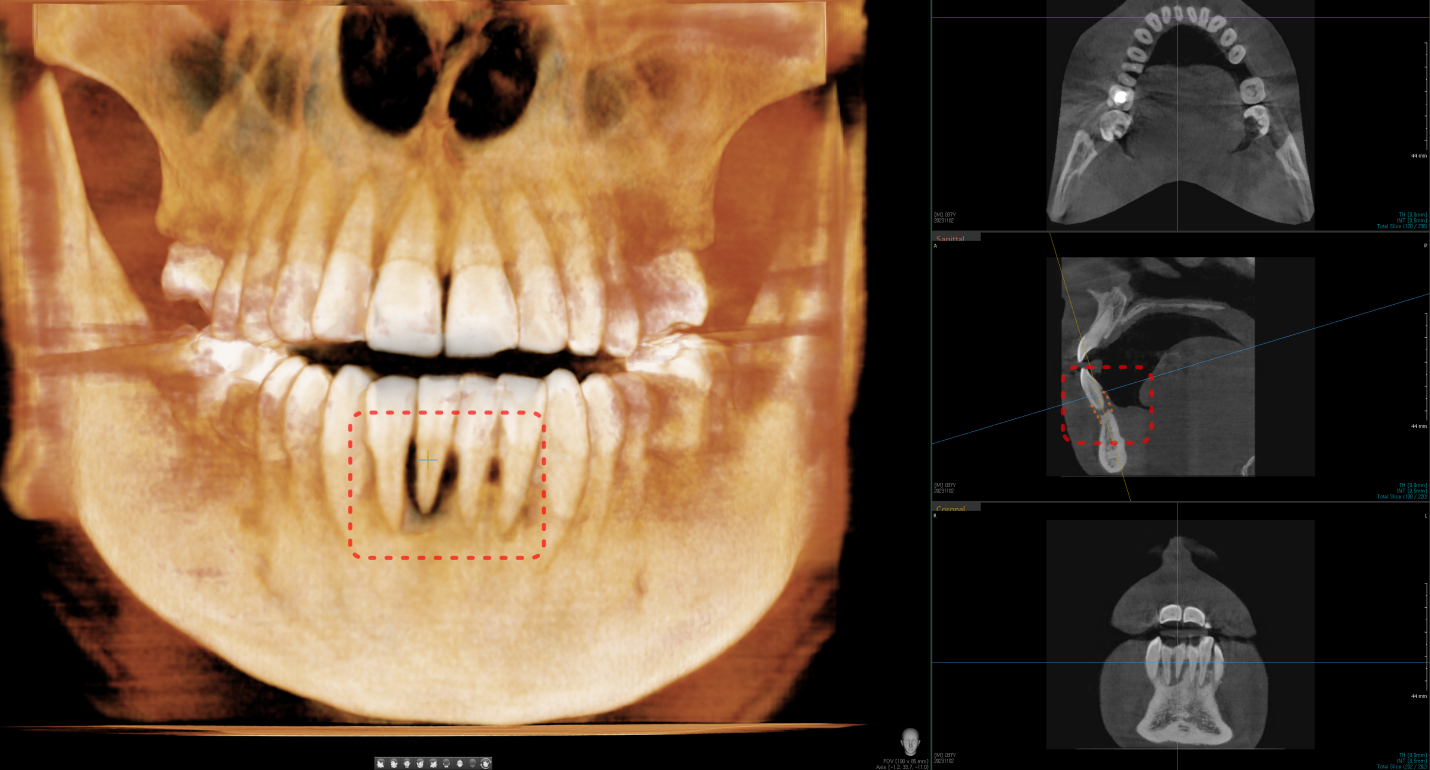
Bone Grafting for Anterior Implants
The anterior region is highly aesthetic and often has relatively thin facial bone. Bone grafting is commonly performed on the facial or buccal side to create adequate bone volume for ideal implant positioning while supporting a natural gum contour.
When the ridge is particularly narrow or extensive augmentation is required, Guided Bone Regeneration (GBR) may be performed. Slowly resorbing graft materials may be selected when maintaining bone volume is particularly important.
02
Bone Grafting for Posterior Implants
In the posterior region, bone grafting may be needed to increase horizontal or vertical bone volume or to fill larger gaps around an implant placed immediately after extraction.
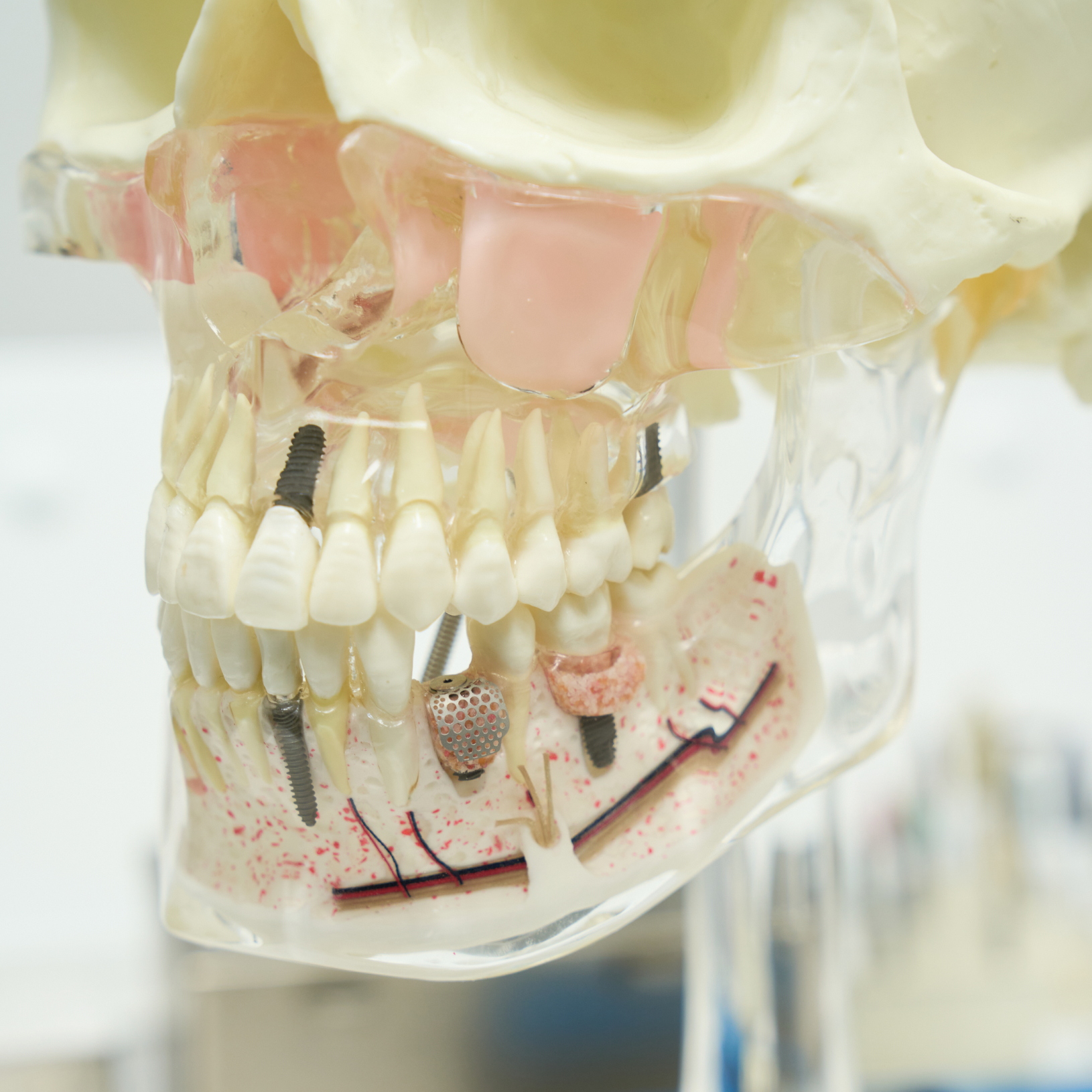
A membrane may also be used to prevent faster-growing soft tissue from occupying the space intended for bone regeneration. Because posterior teeth receive greater chewing forces, extensive horizontal or vertical augmentation may require more advanced surgical techniques.
Do I Really Need a Bone Graft?
Bone grafting is not automatically necessary for every implant. It is considered when the existing bone does not provide sufficient volume or an appropriate contour for stable and properly positioned implant placement.
Not having a bone graft does not automatically mean that an implant will fail or have a shorter lifespan. Likewise, having a bone graft does not guarantee that an implant will last longer. The decision should be based on the patient’s anatomy, implant position, bone condition, and overall treatment plan.
What matters most is determining when bone grafting is truly necessary and clearly explaining why it is recommended, what technique will be used, and what alternatives may be available.
Implant Bone Grafting Patient Review
Types of Bone Grafting Procedures
01
Socket Preservation
Socket preservation, also known as alveolar ridge preservation, is performed after tooth extraction to help minimize shrinkage of the extraction site when implant placement needs to be delayed. Bone graft material is placed into the extraction socket to preserve as much ridge volume as possible for future implant treatment.
02
Bone Grafting
Conventional bone grafting may be performed when the area of bone loss is relatively limited or when a significant gap remains around an implant placed immediately after tooth extraction.
03
Guided Bone Regeneration (GBR)
Guided Bone Regeneration is used when more extensive horizontal or vertical bone augmentation is required. A barrier membrane, such as a collagen membrane, or in selected cases a titanium mesh, may be used to stabilize the graft and maintain the space required for new bone formation.
04
Sinus Elevation
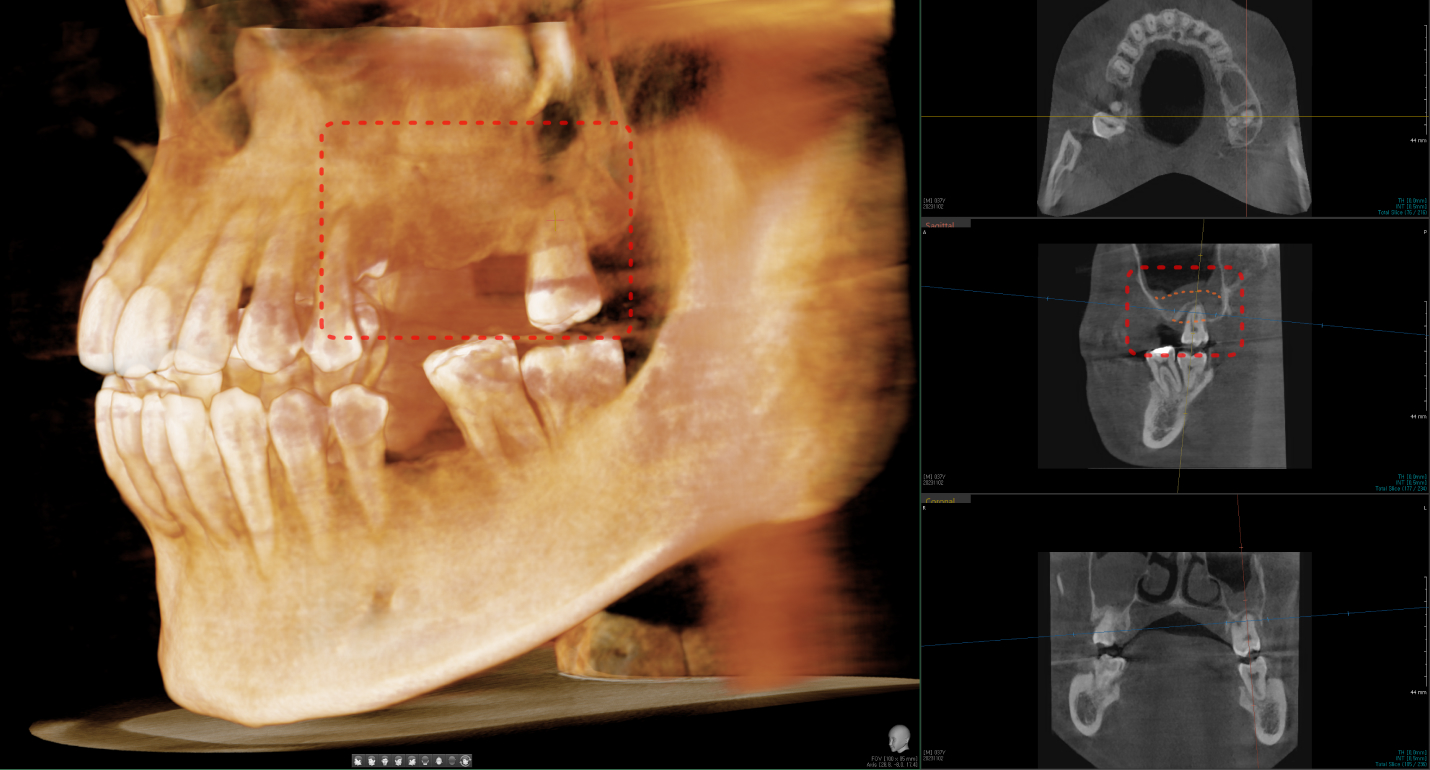
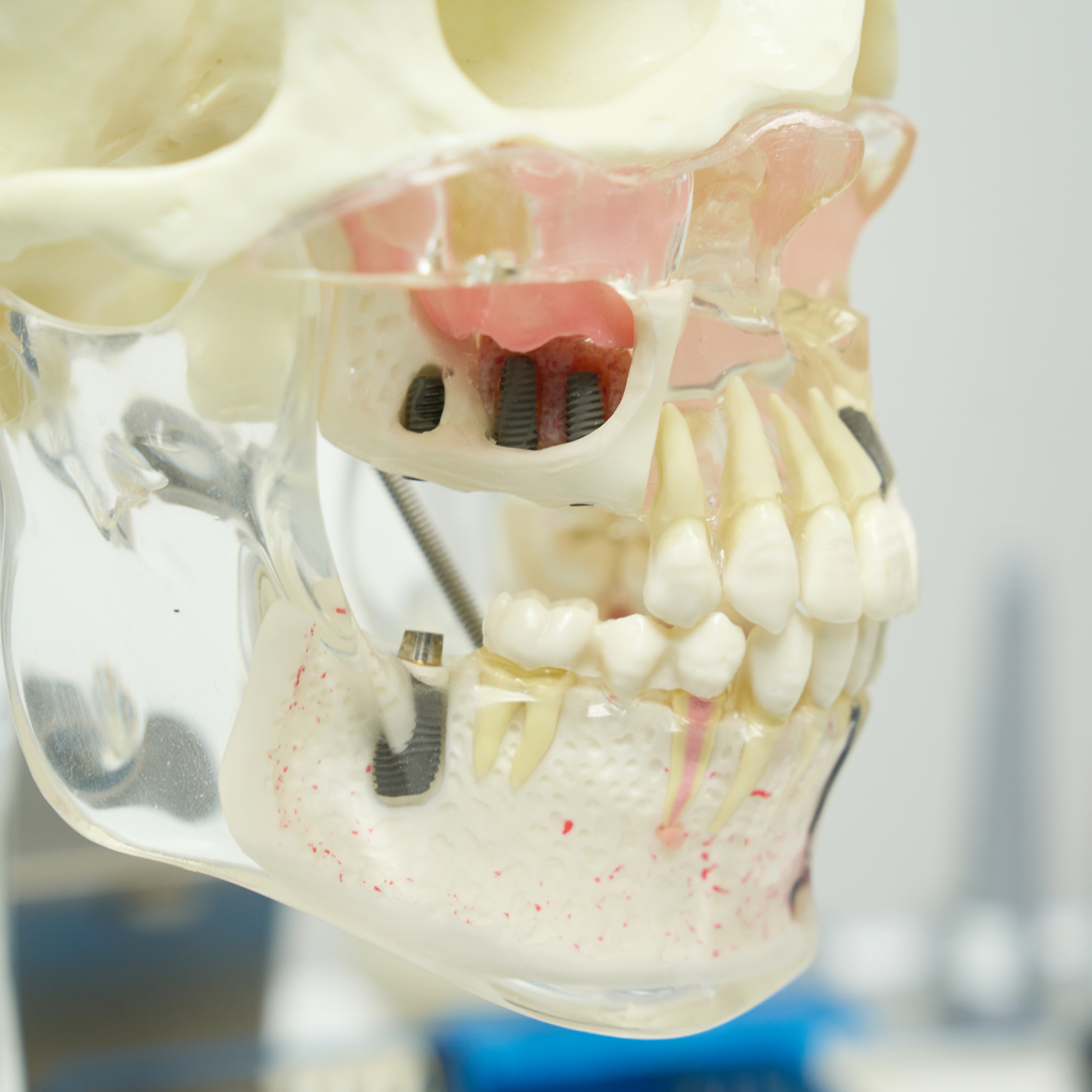
Sinus elevation, or sinus augmentation, is performed in the posterior upper jaw when there is insufficient vertical bone height for implant placement. The sinus membrane is carefully elevated and bone graft material is placed beneath it to increase the available bone height.
Depending on the clinical situation, the procedure may be performed using a crestal approach or a lateral approach. When sinus augmentation is required, the overall treatment period may be longer.
Autogenous bone is harvested from another area of the patient’s own mouth or body and transplanted to the graft site. Because it contains the patient’s own bone-forming cells and biological components, it has excellent regenerative potential. However, the available amount is limited and an additional donor site may be required.
02
Allograft
Allograft material is processed human donor bone. Because it does not require harvesting bone from the patient, it can reduce the need for an additional surgical donor site. Various processing methods are available, including demineralized freeze-dried bone allograft (DFDBA).
03
Xenograft
Xenograft material is derived from animal bone that has been extensively processed to remove organic components. It is commonly used as a scaffold for new bone formation and tends to resorb relatively slowly, which can be advantageous when long-term volume maintenance is important.
04
Synthetic Bone Graft
Synthetic bone grafts are manufactured from biocompatible materials such as hydroxyapatite or other bioactive ceramics. Because they contain no human or animal-derived tissue, there is no donor-related immune response. Slowly resorbing materials such as hydroxyapatite may be useful when maintaining bone volume is particularly important.
Implant Bone Grafting FAQ
Q.
Does bone grafting make implant surgery more painful?
A .
Bone graft material itself is not necessarily what causes postoperative pain. Discomfort and swelling are influenced by several factors, including the extent of surgery, flap elevation, surgical time, and the amount of tissue manipulation required.
A limited graft performed with minimal tissue manipulation may cause relatively little discomfort, while extensive GBR may result in more swelling and postoperative discomfort.
Q.
How long does bone graft healing take?
A .
Healing time depends on the location, amount of grafting, graft material, and surgical technique. A small graft performed together with implant placement may not significantly extend the overall treatment period.
More extensive procedures, such as sinus augmentation or Guided Bone Regeneration (GBR), may require approximately 3–6 months or longer for adequate healing before the next stage of treatment.
Q.
Is implant bone grafting covered by Korean National Health Insurance?
A .
Bone grafting performed in conjunction with dental implant treatment is generally not covered under the standard National Health Insurance benefit for dental implants for patients aged 65 and older. Coverage may differ depending on individual circumstances and current insurance regulations.
Private dental insurance may provide benefits for bone grafting depending on the individual policy. We recommend checking the specific coverage and claim requirements with your insurance provider.