The Square Dental Clinic was founded by dentists trained at Seoul National University and has remained in the same location in Gwanghwamun and Jongno for nearly a decade. Guided by the principle, “We never provide treatment that we would not recommend to our own family,” we have approached every case with meticulous care and craftsmanship. Thanks to the trust of our patients, The Square Dental Clinic has grown into a clinic known by word of mouth throughout Gwanghwamun and Jongno for both its clinical care and overall environment.
For comprehensive smile restoration and facial reconstruction, our team brings together specialists in integrated dentistry, prosthodontics, and orthodontics trained at Seoul National University. By combining expertise across multiple disciplines, we provide coordinated treatment designed to achieve a high level of precision, function, and aesthetics.
The Square Total Solution begins with a comprehensive diagnosis and an individualized treatment plan. Rather than relying on a single type of treatment, we combine the appropriate disciplines to pursue a balanced result that considers both function and aesthetics. In complex cases, limiting treatment to only one area can lead to an incomplete plan and compromise the final outcome.
Smile Line Recovery
Smile Arc
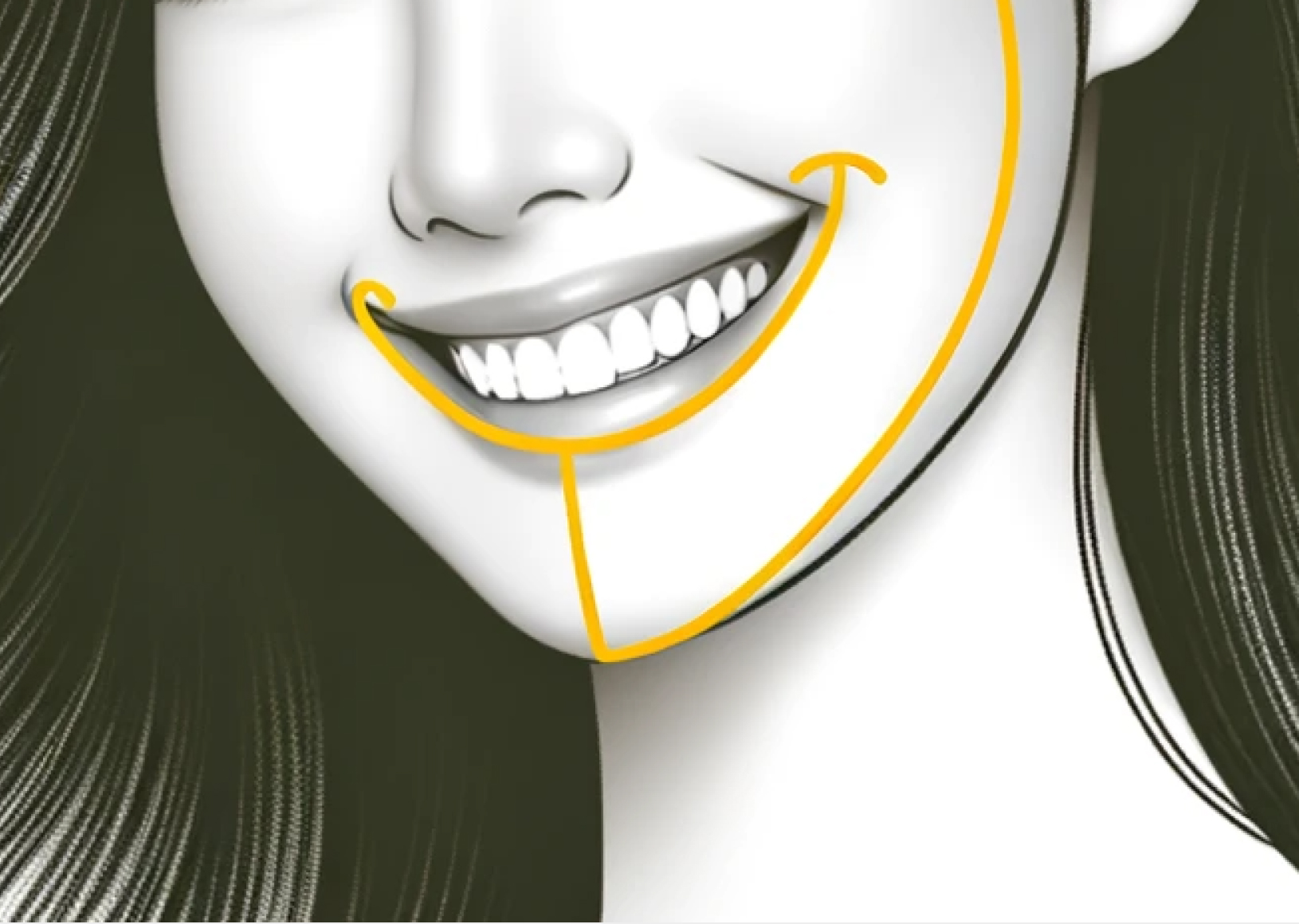
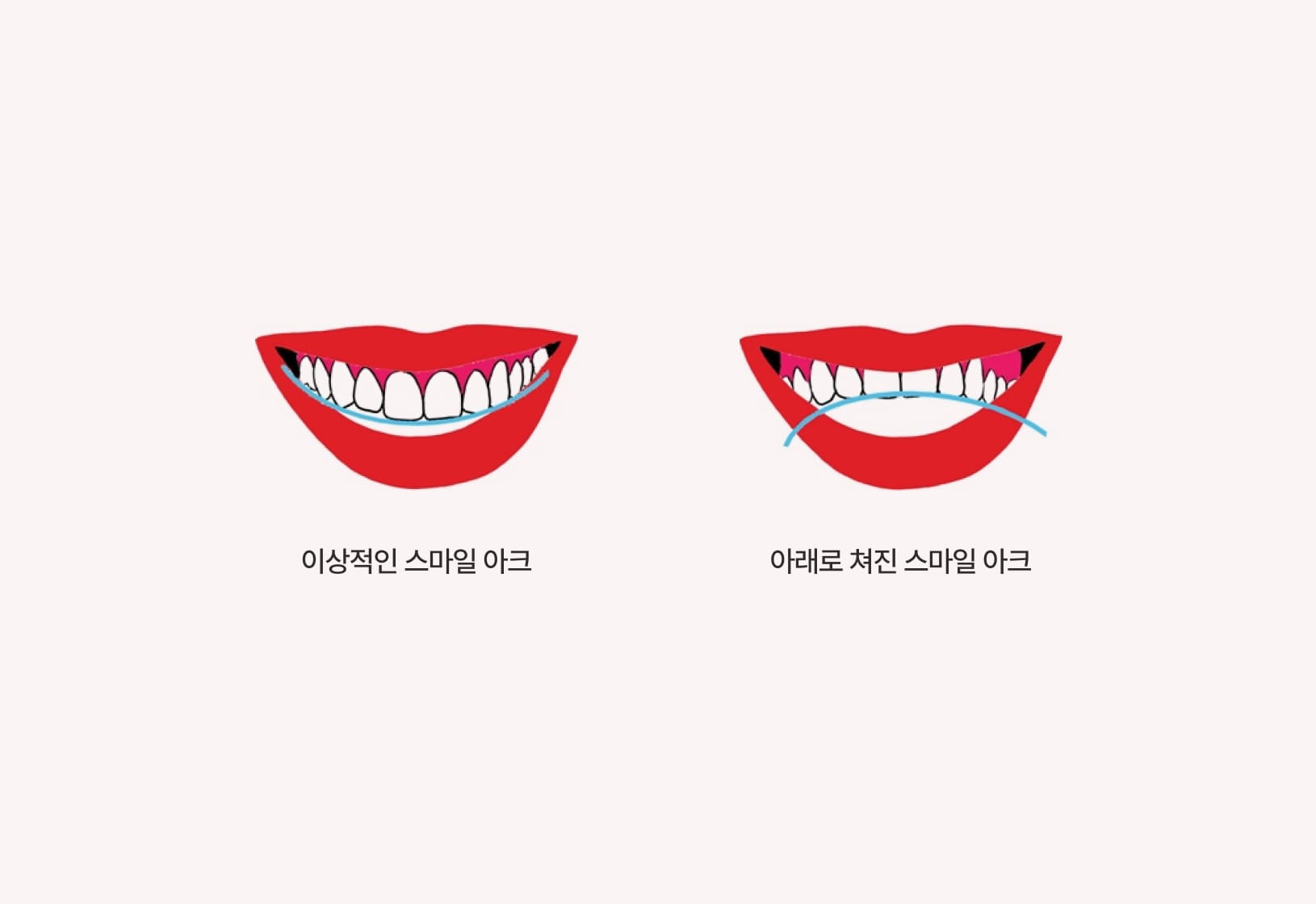
The smile arc refers to the curve created by the incisal edges of the upper teeth. A natural and aesthetically pleasing smile arc generally follows the curvature of the lower lip, with the upper front teeth forming a gentle upward curve.
Vertical Position of the Smile Arc
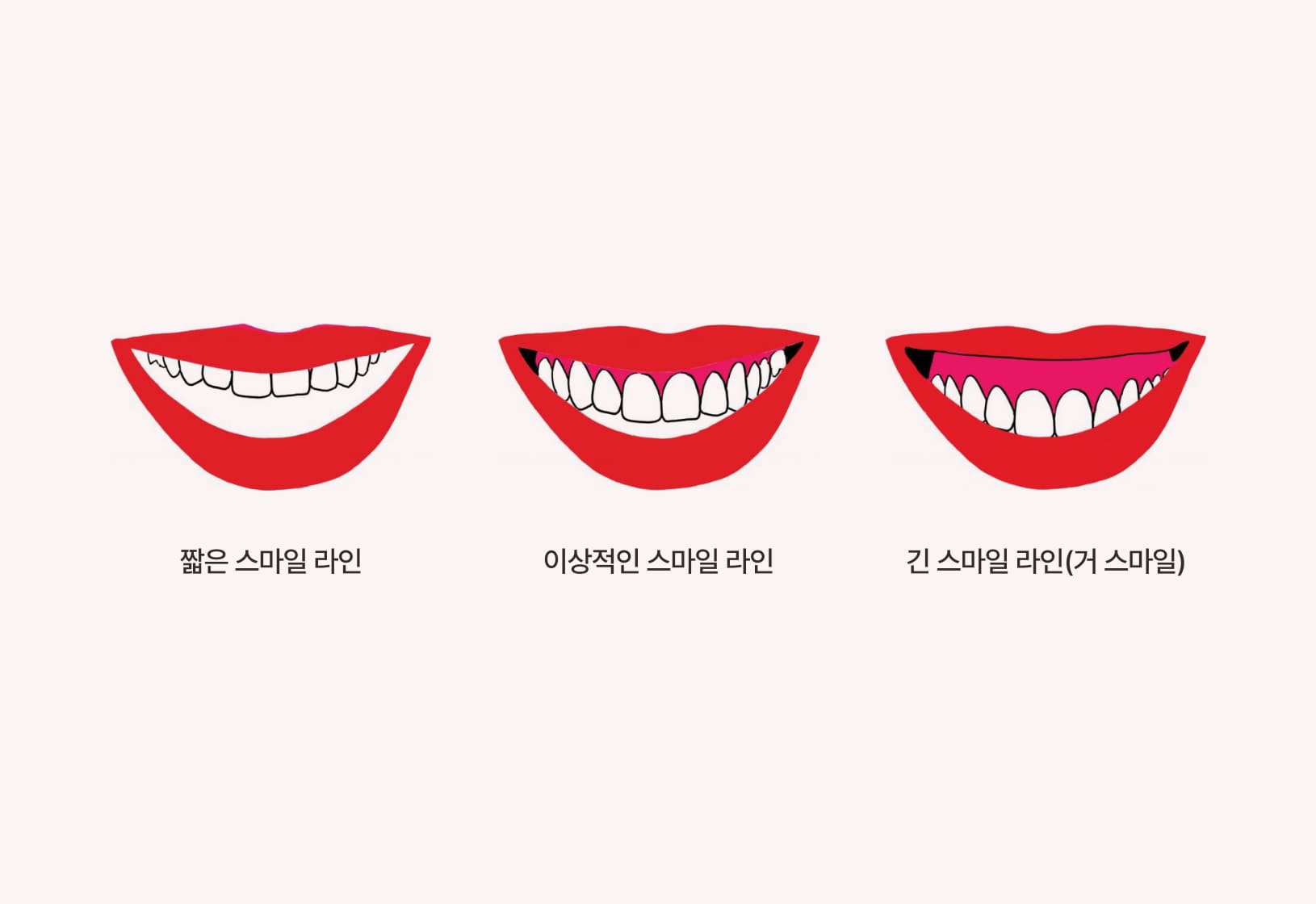
An aesthetically balanced smile typically displays most of the upper teeth, with the gingival margin of the upper teeth positioned near the upper lip and the upper front teeth overlapping the lower front teeth by approximately 1–2 mm. The ends of the smile arc generally sit slightly below the corners of the mouth.
Shape of the Smile Arc
A smile arc that follows the natural curvature of the lower lip generally creates a softer and more harmonious smile.
Buccal Corridor
01
Buccal Corridor
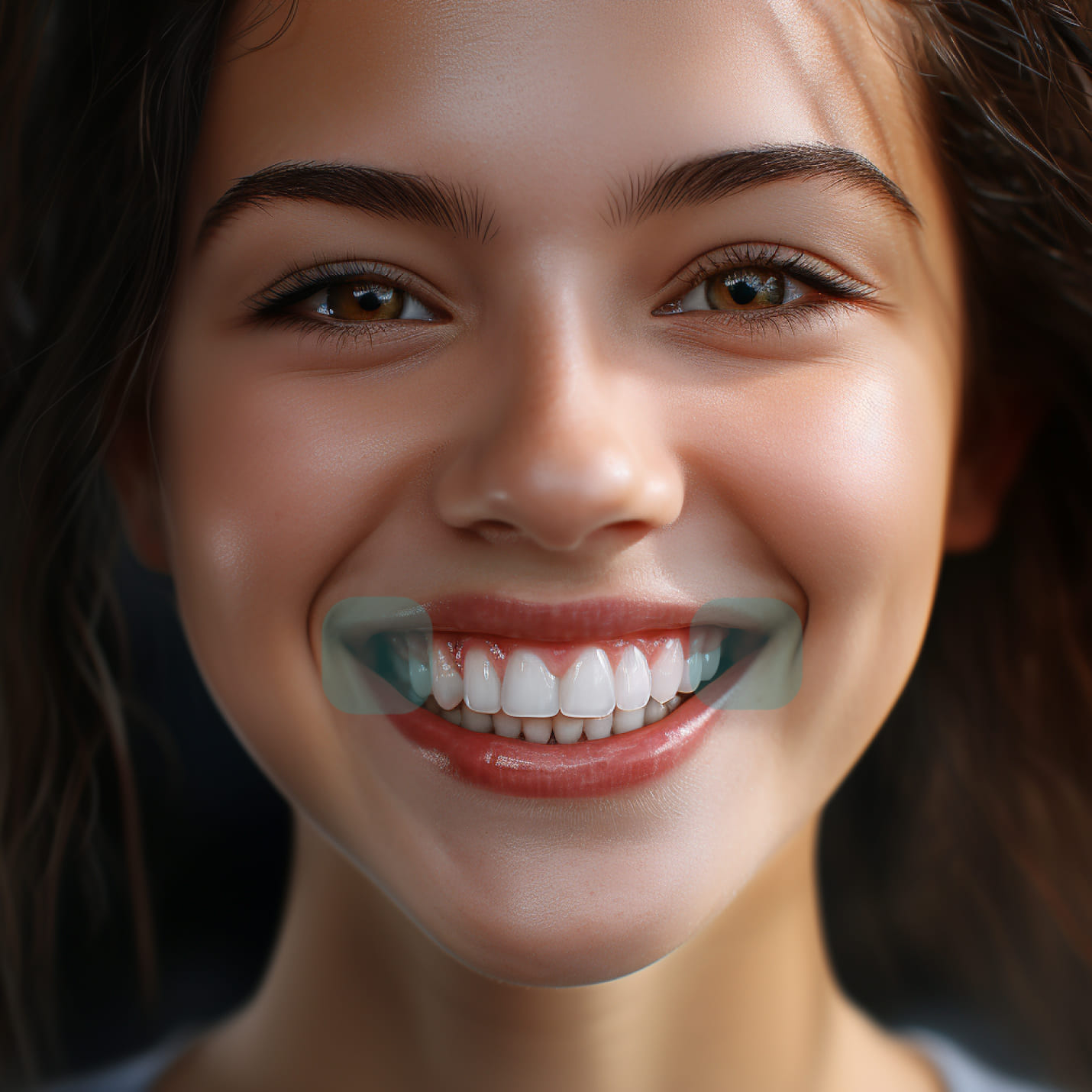
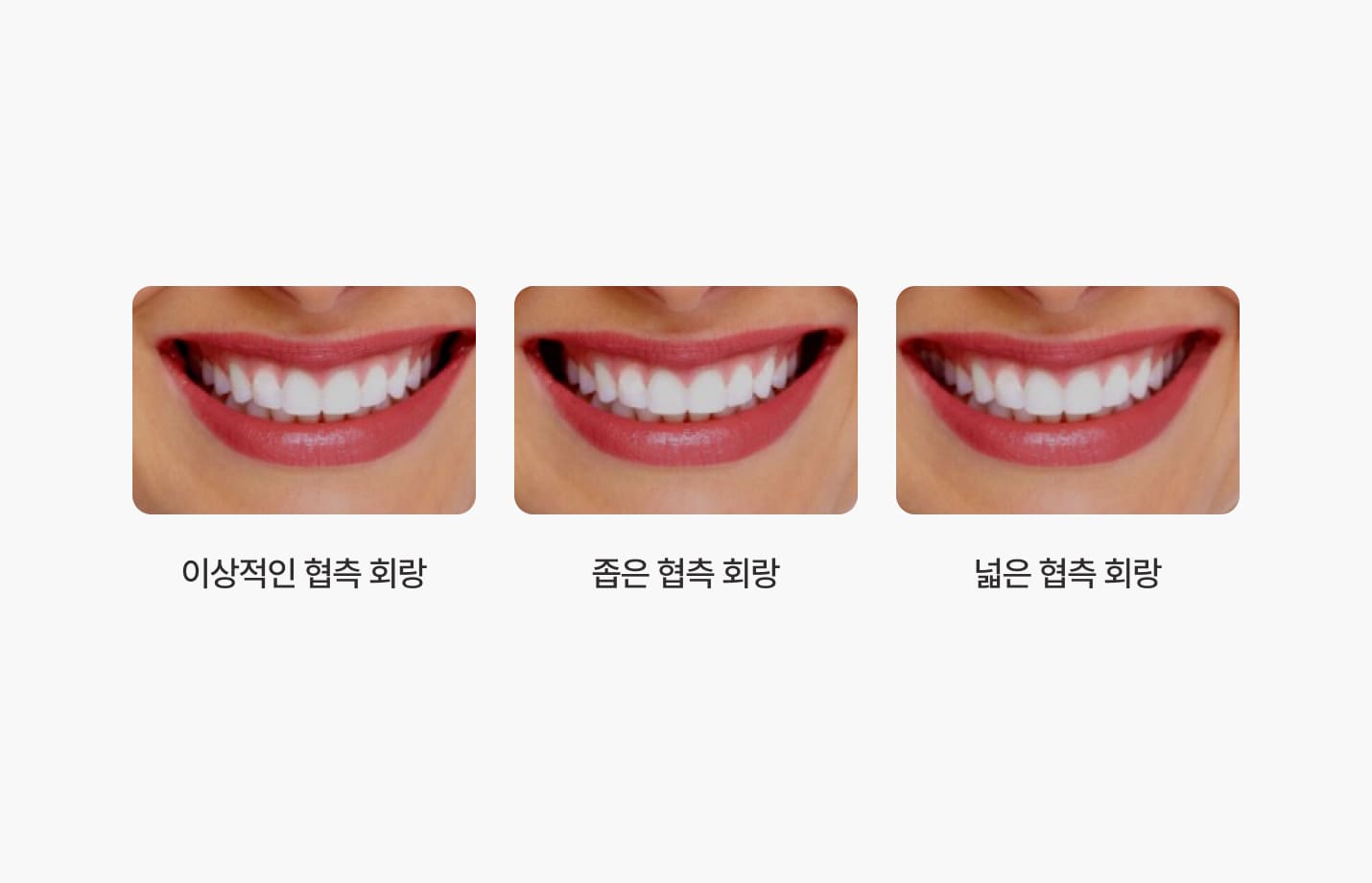
The buccal corridor is the dark space visible between the side teeth and the corners of the mouth when smiling. Its appearance is influenced by the relationship between the lips and the shape and width of the dental arch.
02
An Ideal Buccal Corridor
An Ideal Buccal Corridor
An ideal buccal corridor generally allows the area up to the front portion of the first molars to be naturally visible.
An Excessively Narrow Buccal Corridor
Too many teeth may be visible, creating an overly full or crowded appearance.
An Excessively Wide Buccal Corridor
Too little of the teeth may be visible, making the smile appear narrow or constricted.
Facial Muscles
01
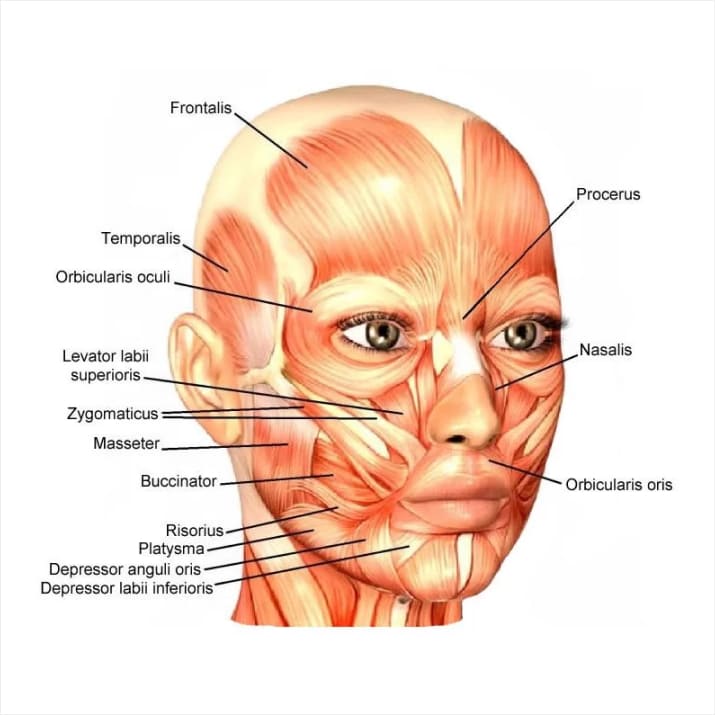
Muscles Involved in Smiling
Upper Face
Muscles around the eyes
Midface
Zygomaticus major and zygomaticus minor muscles
Lower Face
Muscles around the lips, particularly the modiolus—the point where several facial muscles converge—can have a significant influence on the natural appearance of a smile.
02
Facial Exercises
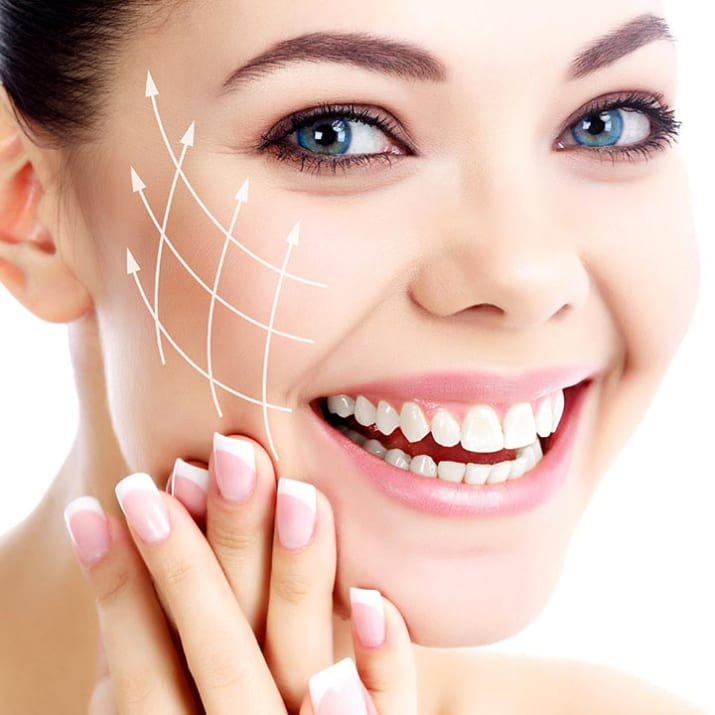
Lift the corners of your mouth while showing as many teeth as comfortably possible. Hold for 3 seconds and repeat 10 times.
Place your fingers at the corners of your mouth to create gentle resistance, then lift the corners upward. Hold for 3 seconds and repeat 10 times.
Fill your cheeks with air like a pufferfish, hold for 3 seconds, and repeat 10 times.
Purse your lips forward as if making an “O” shape, hold for 3 seconds, and repeat 10 times.
Golden Proportions
01
Bolton Ratio
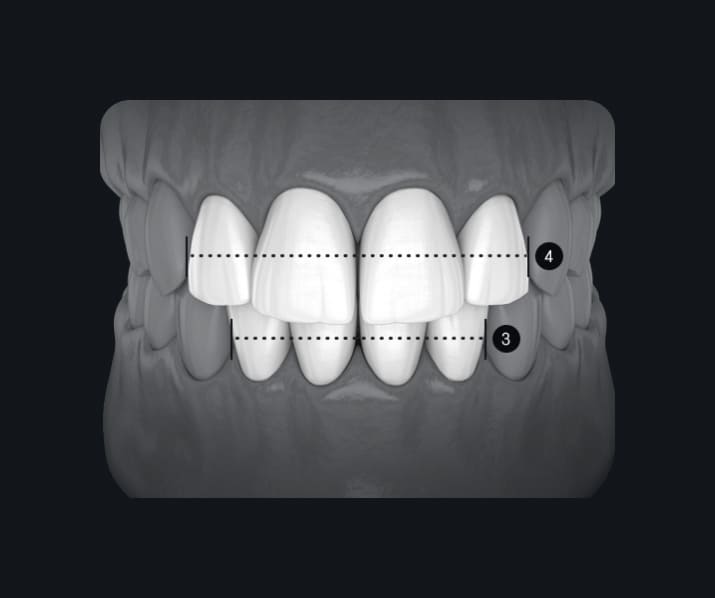
The Bolton ratio evaluates the relative sizes of the upper and lower teeth to help achieve harmonious proportions between the two arches.
02
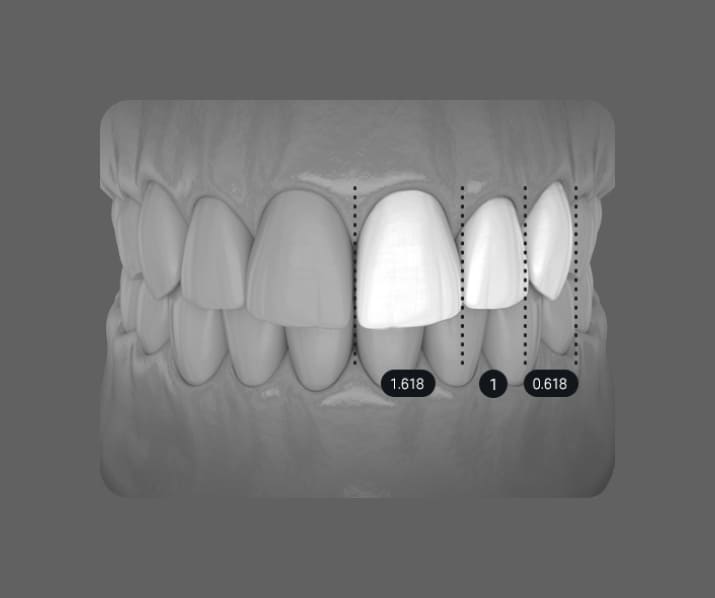
RED Proportion
The RED proportion evaluates the apparent width of the front teeth when viewed from the front. A repeated proportion of approximately 62% has traditionally been discussed as a reference for dental aesthetics.
However, ideal proportions are not identical for every patient. Facial shape, dental arch width, tooth morphology, and individual ethnic characteristics should all be considered when designing a natural smile.
Dental Midline
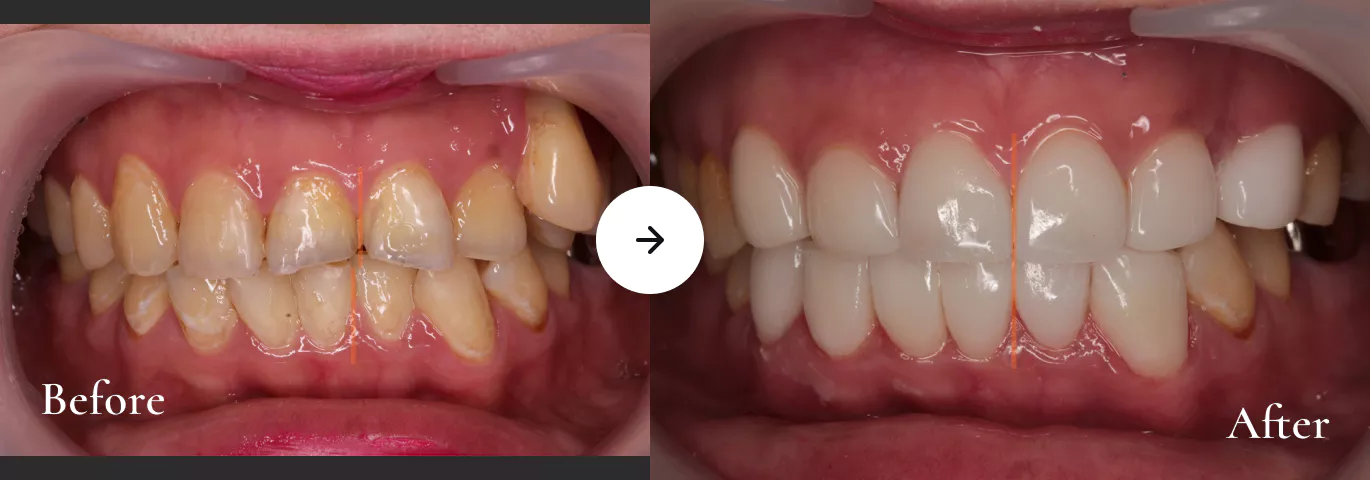
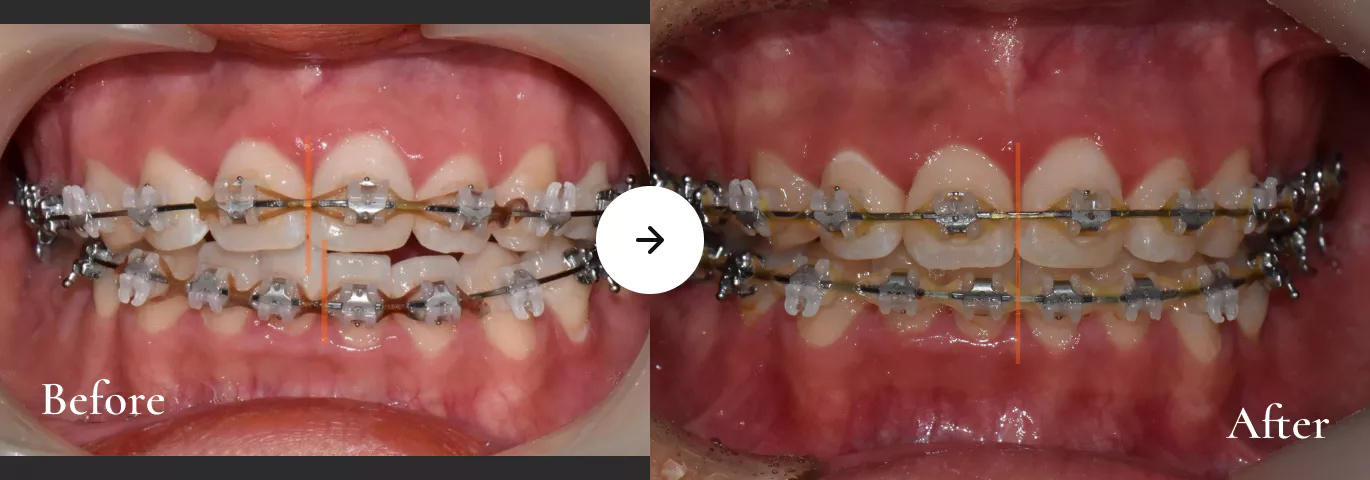
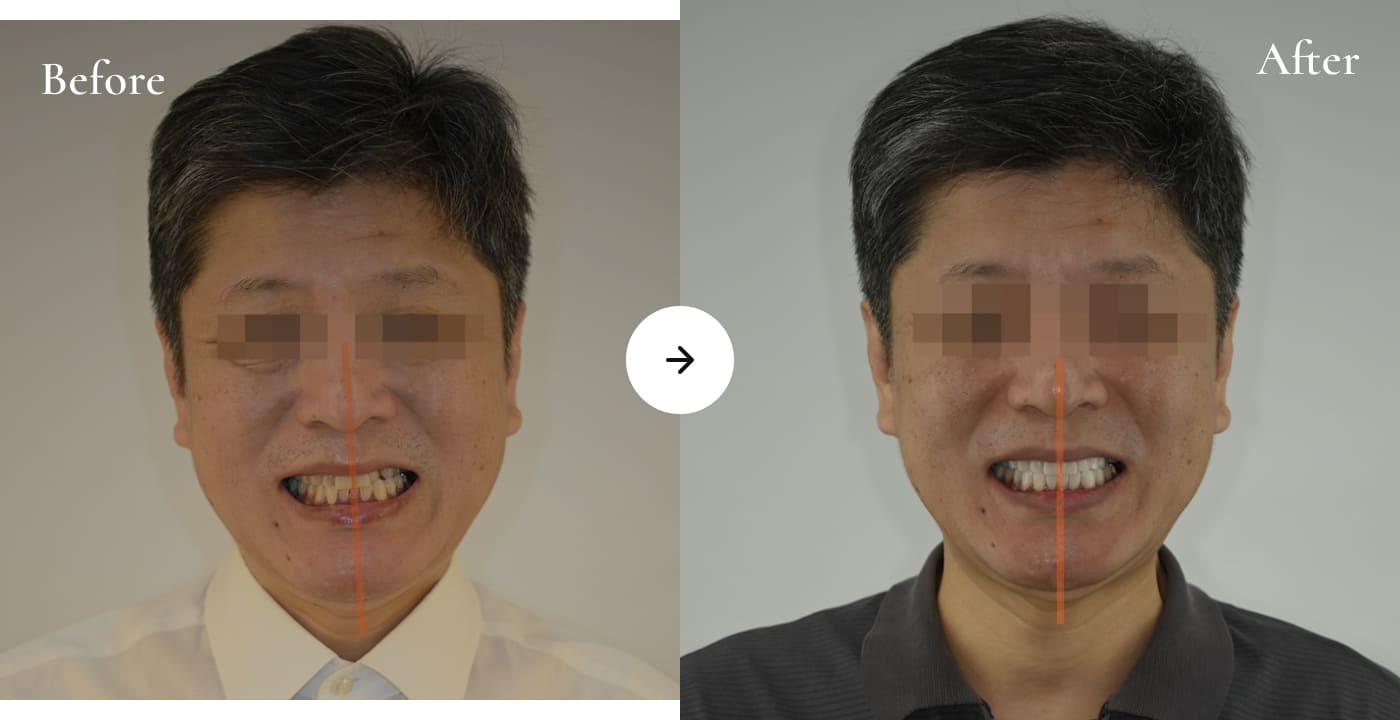
A noticeable discrepancy in the dental midline can contribute to an asymmetric appearance. When the tooth-size relationship is appropriate, orthodontic treatment or restorative treatment may be used to improve the midline.
It is important not to evaluate only the relationship between the upper and lower dental midlines. The dental midline should also be assessed in relation to the facial midline to create a more balanced overall appearance.
Case: Midline Correction with MINISH
Case: Midline Correction with Orthodontic Treatment
Facial Profile Reconstruction
Facial Profile Improvement
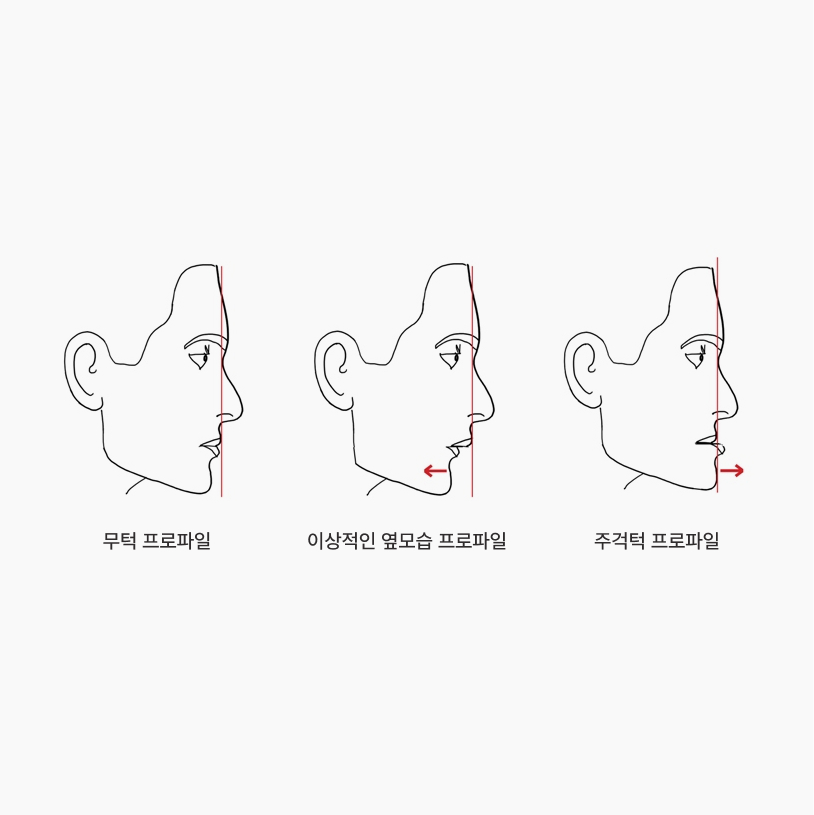
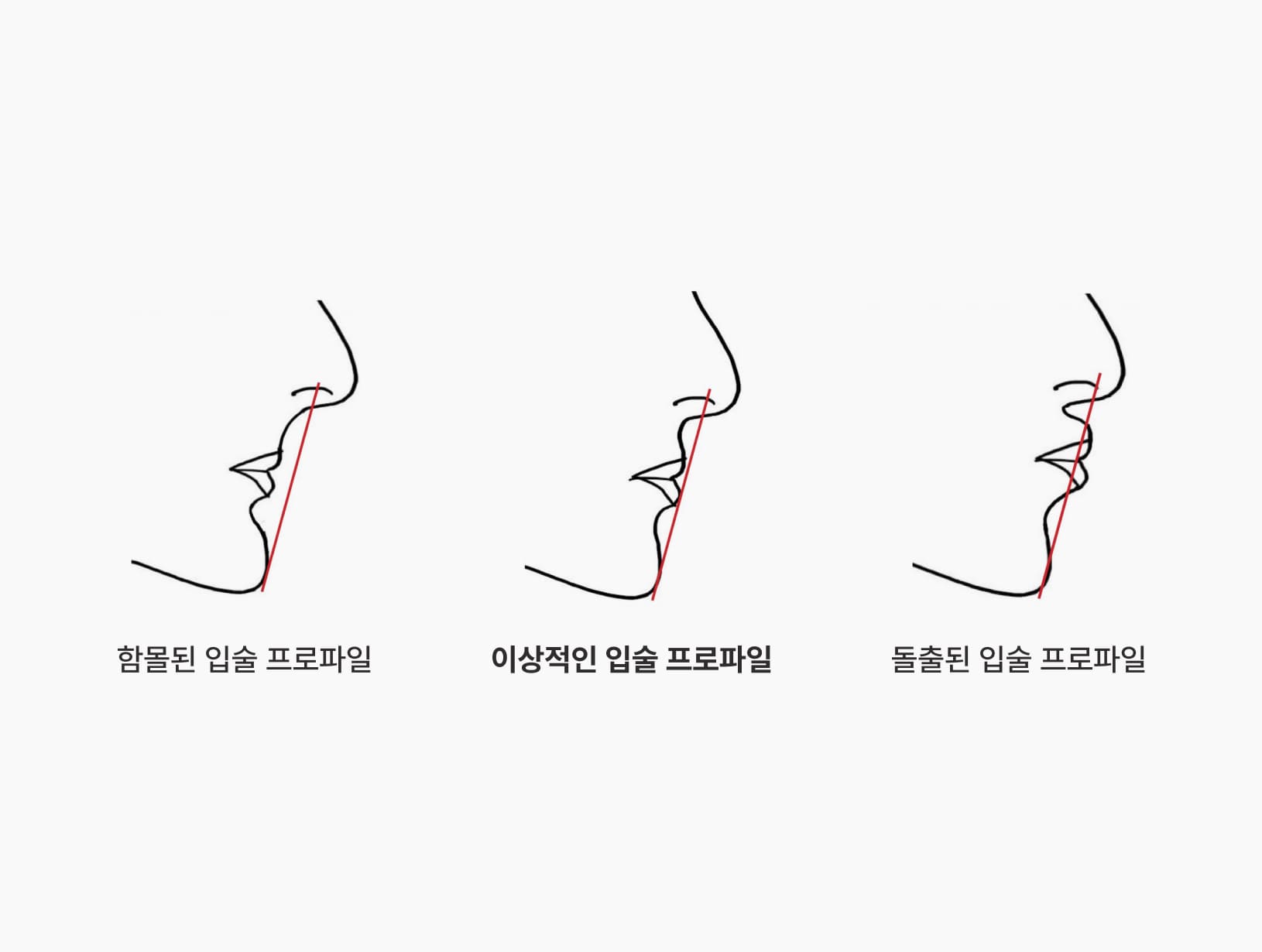
Facial Profile Classification
Severe skeletal malocclusion may require surgical treatment such as orthognathic surgery.
Approaches to Improving the Side Profile
In cases of severe skeletal malocclusion, surgical treatment such as orthognathic surgery may need to be considered.
Improving Tooth Angulation
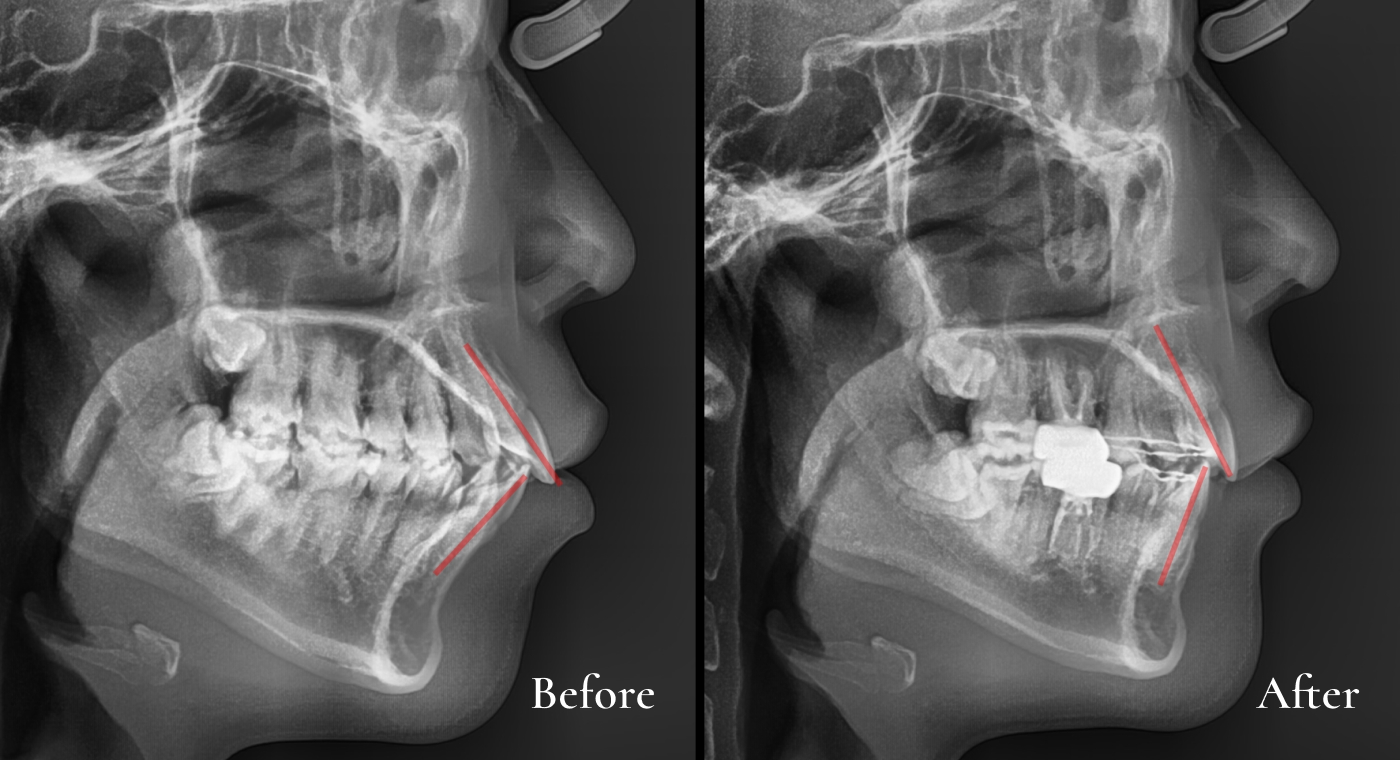
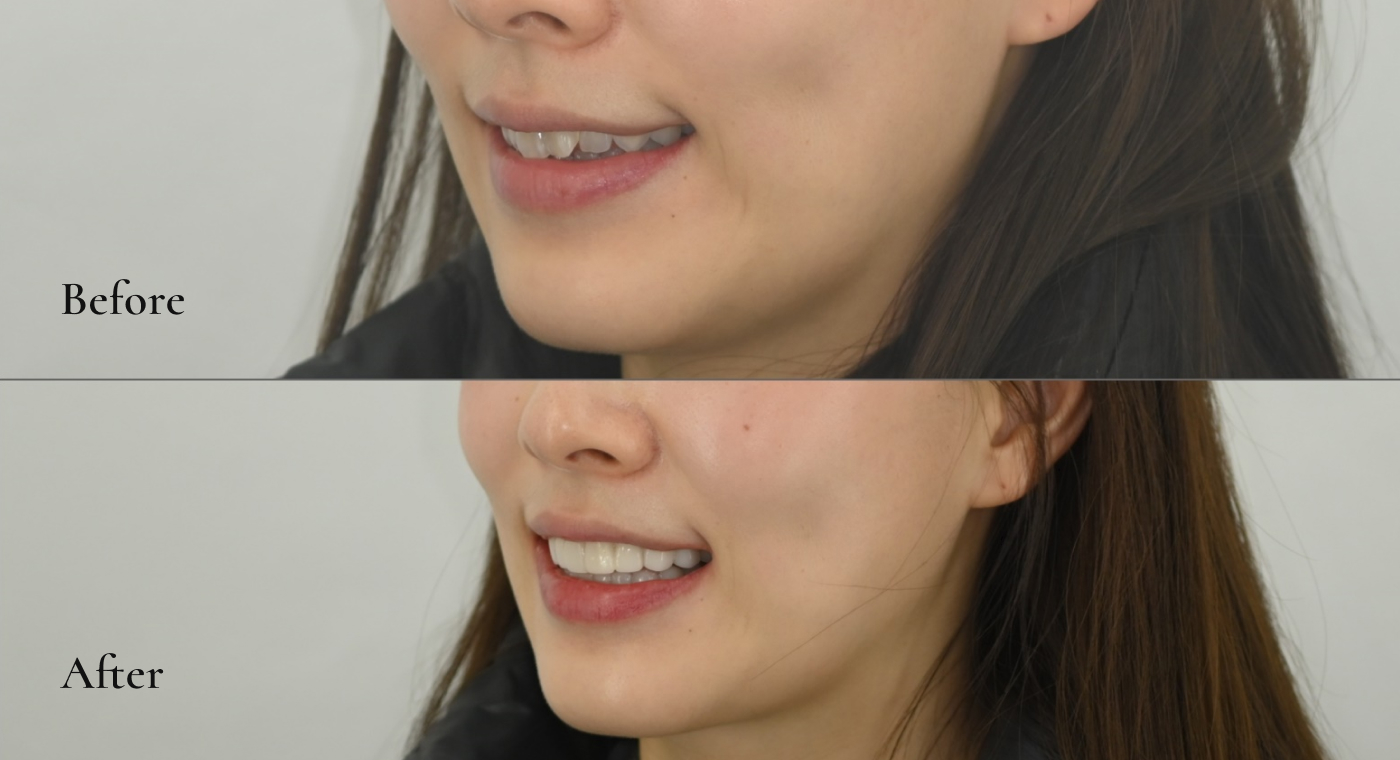
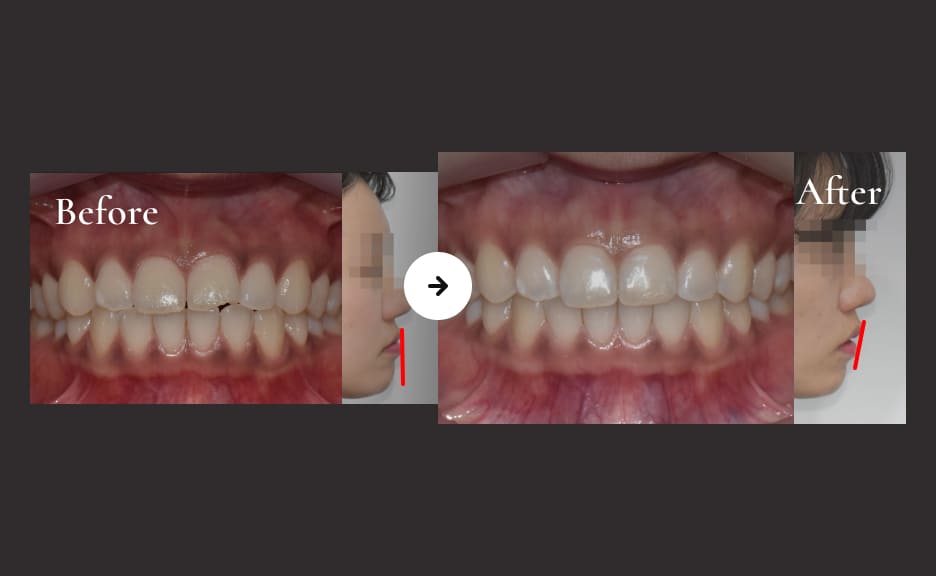
Improving the Shape and Position of Protruding Teeth
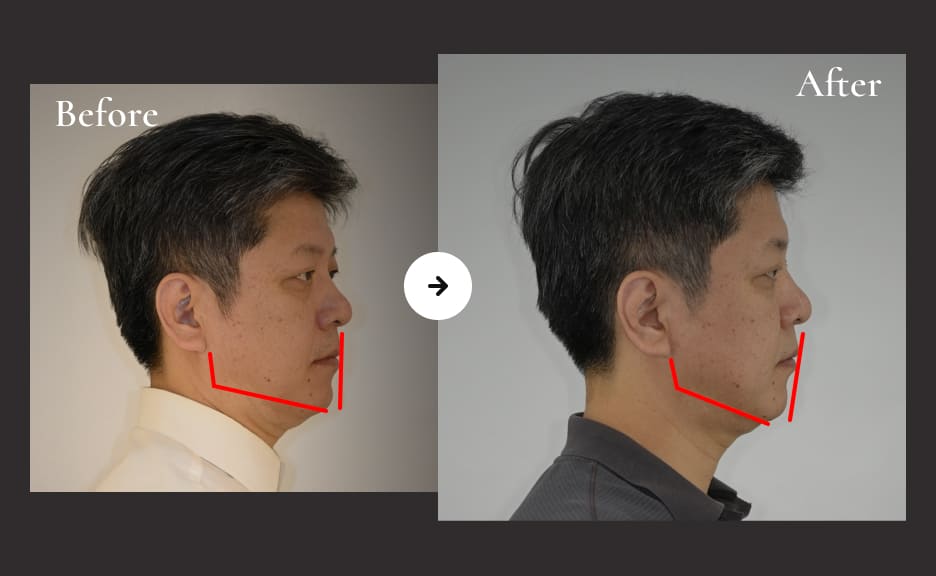
Improving Lip Support and Protrusion
E-Line Assessment
Severe skeletal malocclusion may require surgical treatment such as orthognathic surgery.
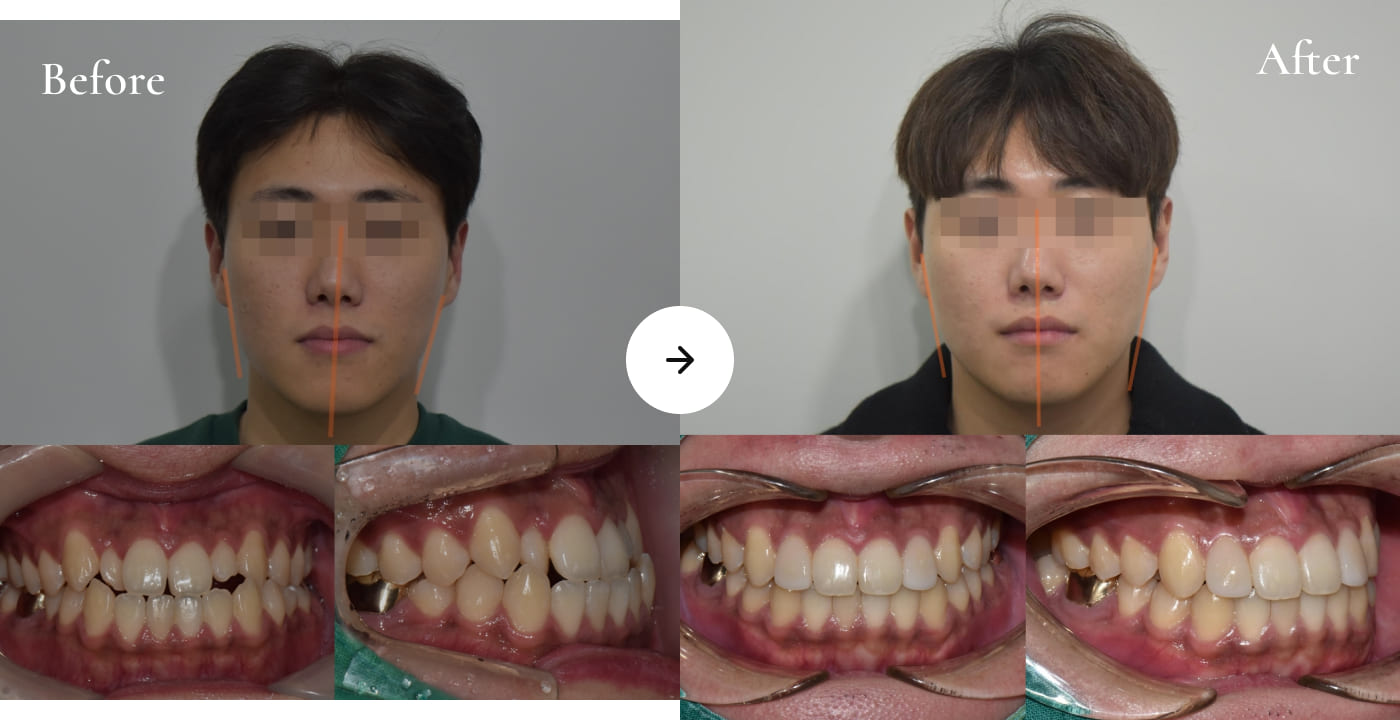
Improving Facial Asymmetry
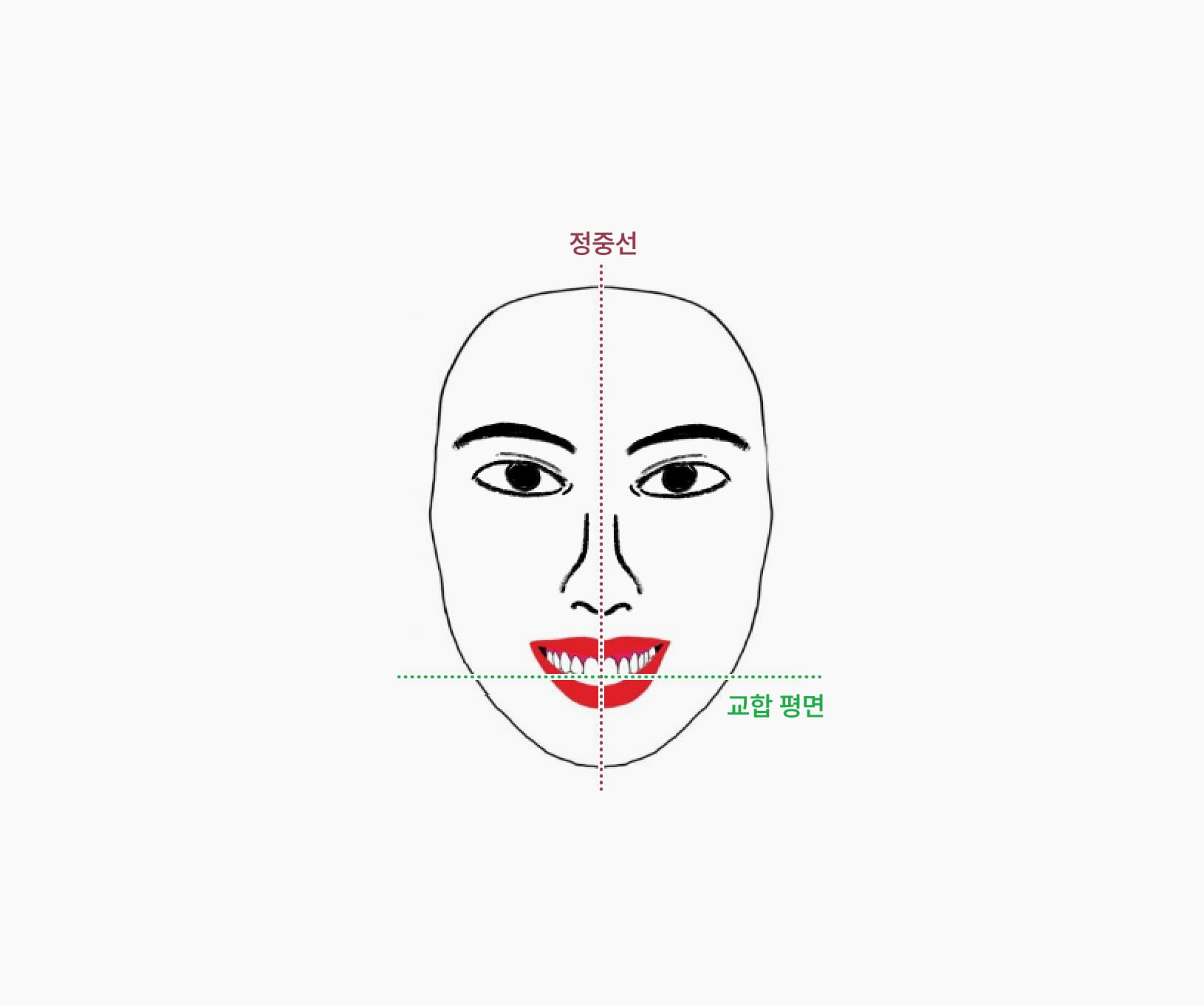
To evaluate horizontal dental asymmetry, we compare the interpupillary line—the line connecting the pupils—with the occlusal plane. A discrepancy between these two reference lines can contribute to a canted or asymmetric appearance.
True skeletal asymmetry generally cannot be fully corrected with orthodontics alone. Dental asymmetry, however, may be improved orthodontically, while certain muscular asymmetries may require additional treatment depending on the cause.
Severe skeletal malocclusion may require surgical treatment such as orthognathic surgery.
Approaches to Improving the Frontal Profile
Improving Asymmetry with Orthodontic Treatment
Improving Asymmetry with Restorative Tooth Reshaping
Improving Facial Proportions
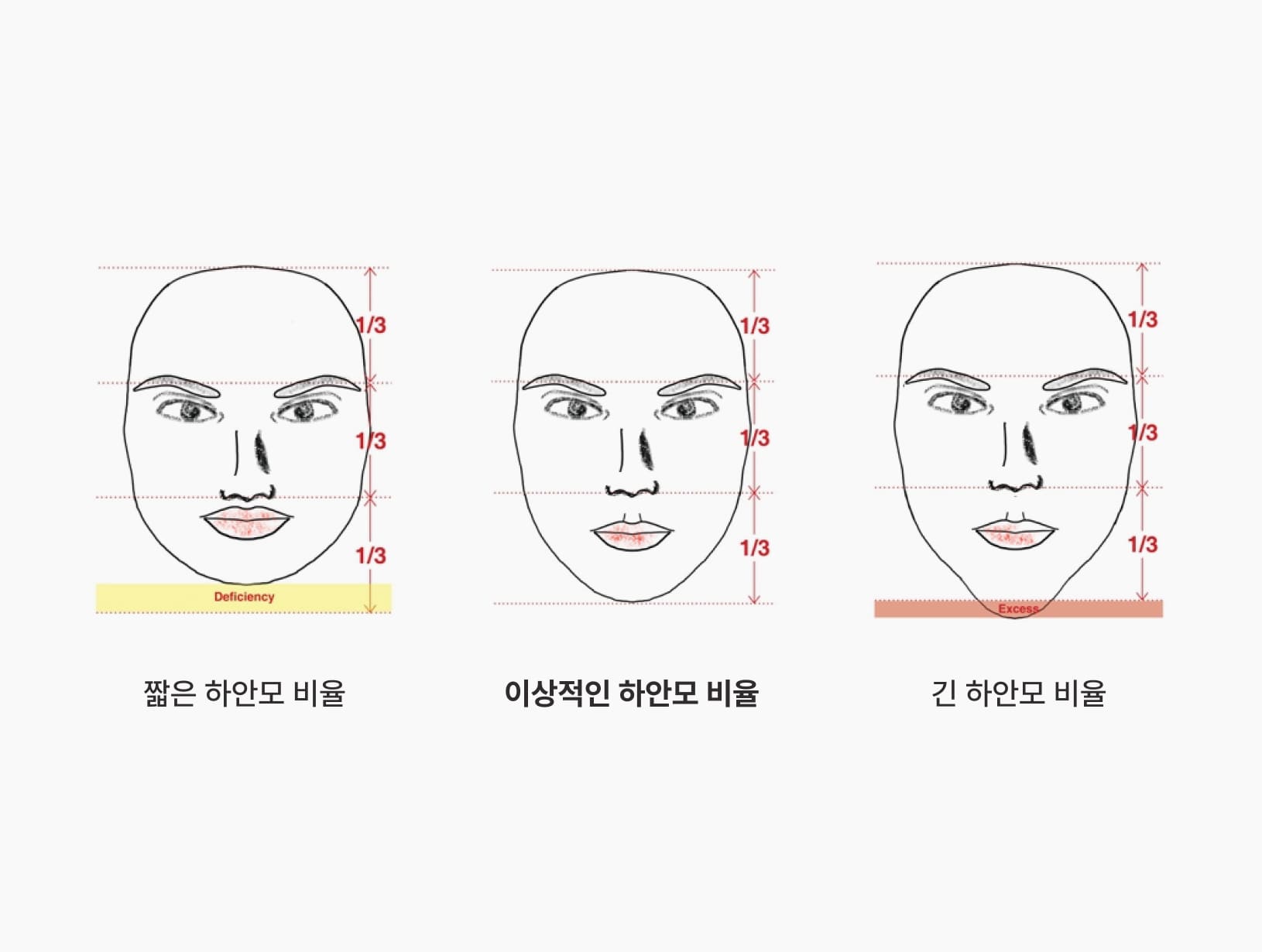
Aesthetic Differences According to Lower Facial Height
Severe skeletal malocclusion may require surgical treatment such as orthognathic surgery.
Treatment Options for Improving Lower Facial Proportions
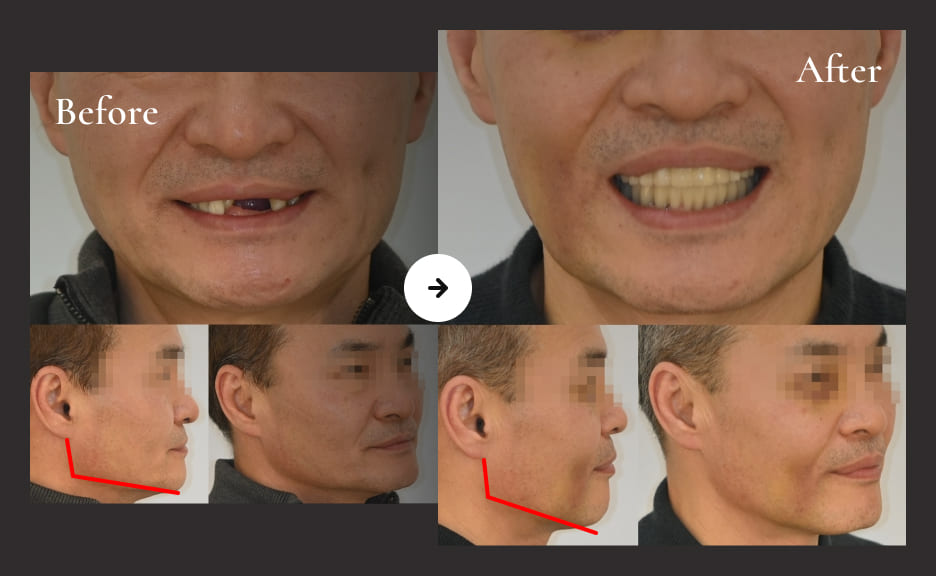
Improving Lower Facial Proportions with Reconstructive Implant Treatment
Improving Lower Facial Proportions with Orthodontic Treatment
Improving Lower Facial Proportions with Full-Mouth Restorative Treatment